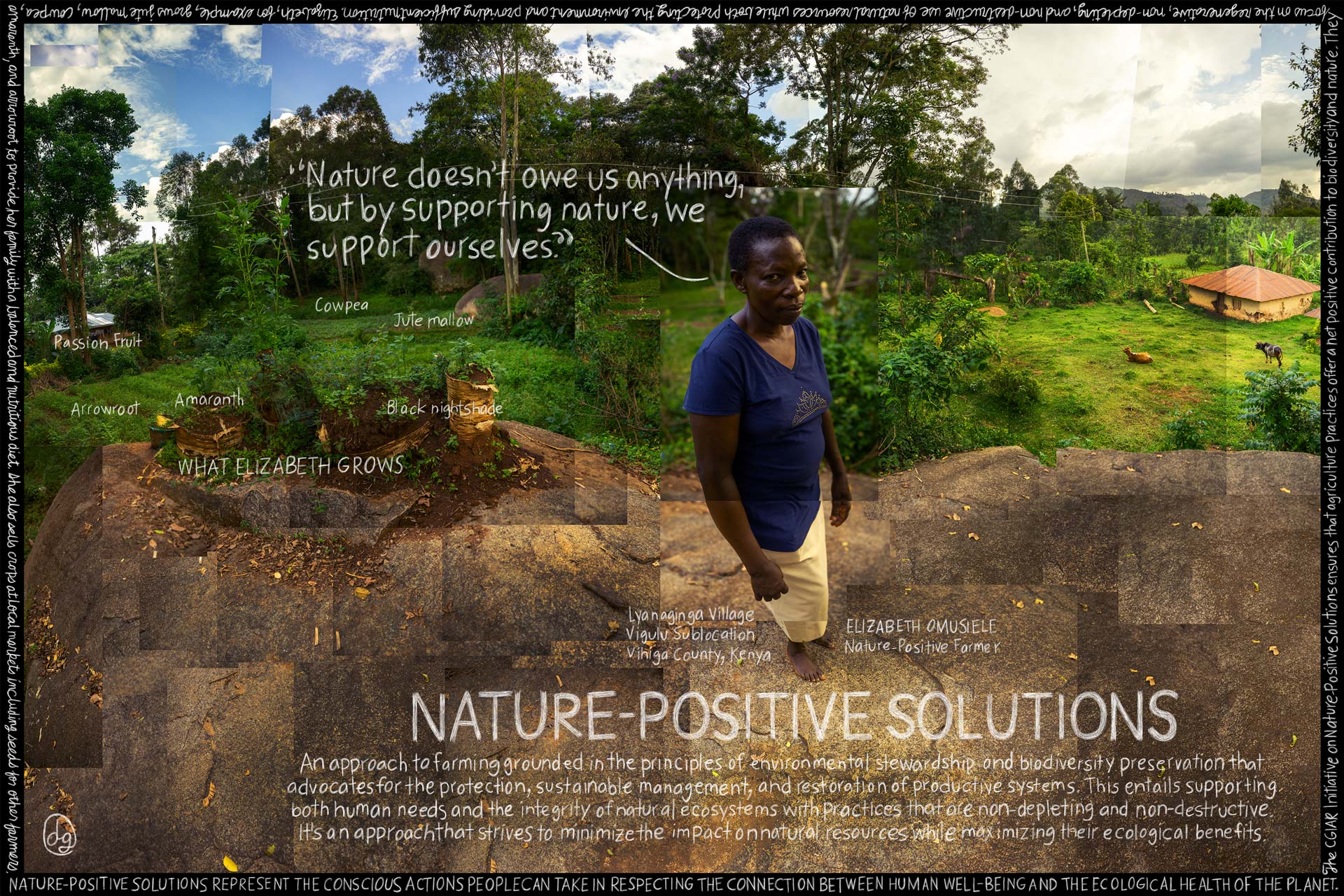

Our panel of experts examines and reveals how nature-positive solutions help create a healthier planet, and where our responsibility lies in initiating and expanding these efforts.
What is nature-positive?
With contributions from WWF International, IUCN and IFPRIWhat are the components of a nature-positive food system?
With contributions from BAIF Development Research Centre, the Alliance of Bioversity International and CIAT, IWMI and CIPHow do we spread nature-positive solutions?
With contributions from IFAD, IWMI and The LexiconOur panel of experts examines and reveals how nature-positive solutions help create a healthier planet, and where our responsibility lies in initiating and expanding these efforts.
About 24% of the 3,980 wild food species identified globally are reported to be declining in abundance, due to overexploitation, habitat loss, and environmental changes. This loss further reduces food security.
Transforming food and land systems to enhance agrobiodiversity could yield economic gains of up to $5.7 trillion annually by 2030.
Nature-Positive Solutions Initiative Lead
Alliance Bioversity International and CIAT
Nature-positive food systems imply a profound transformation of food systems to address multiple crises, including climate change, land degradation, poor nutrition, and biodiversity loss. For this transformation to occur, there is a need for innovative technological approaches, such as agroecology, as well as behavioral changes that involve all key actors, including farmers, consumers, researchers, investors, policymakers, and financial institutions.
From a technical and scientific perspective, it is crucial to focus on major gaps, such as promoting agrobiodiversity and diversifying food production, and improving soil biodiversity to strengthen soil-related ecosystem services that impact plant health and vigor. This includes designing production systems that rely on intercropping and crop rotation schemes, which enhance soil biodiversity and reduce the need for chemical fertilizers and pesticides. These systems often incorporate agroforestry to increase the number of trees on farms. Enhancing biodiversity will not only positively impact the environment but also improve public health by providing access to more nutrient-dense diets and reducing exposure to pesticide residues.
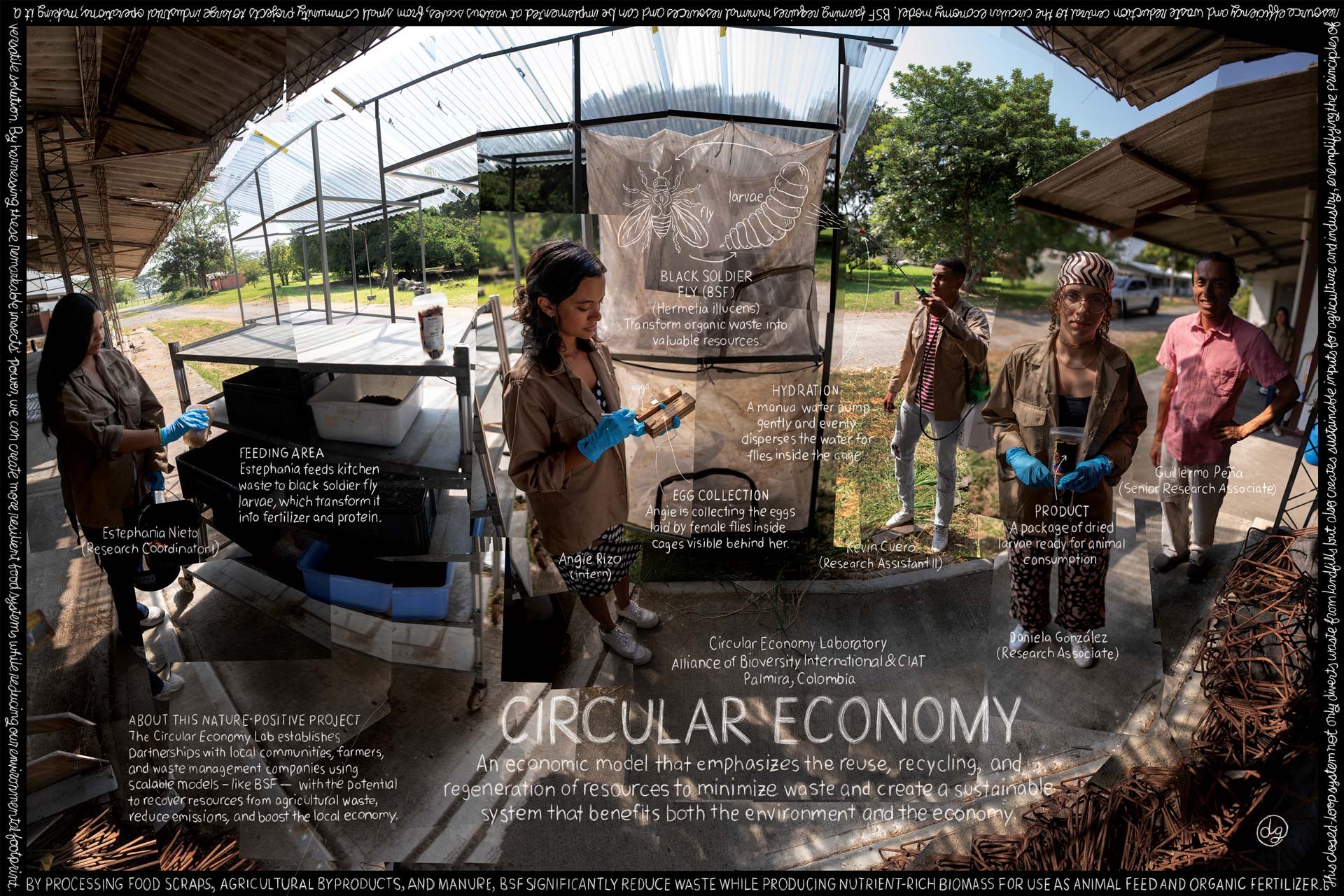
In addition to using (agro)biodiversity, nature-positive food systems must be circular. Circularity involves recycling waste to prevent environmental pollution, reducing the need for chemical fertilizers by producing bio-fertilizers from waste, and creating new business opportunities for farmers and employment options for young people.
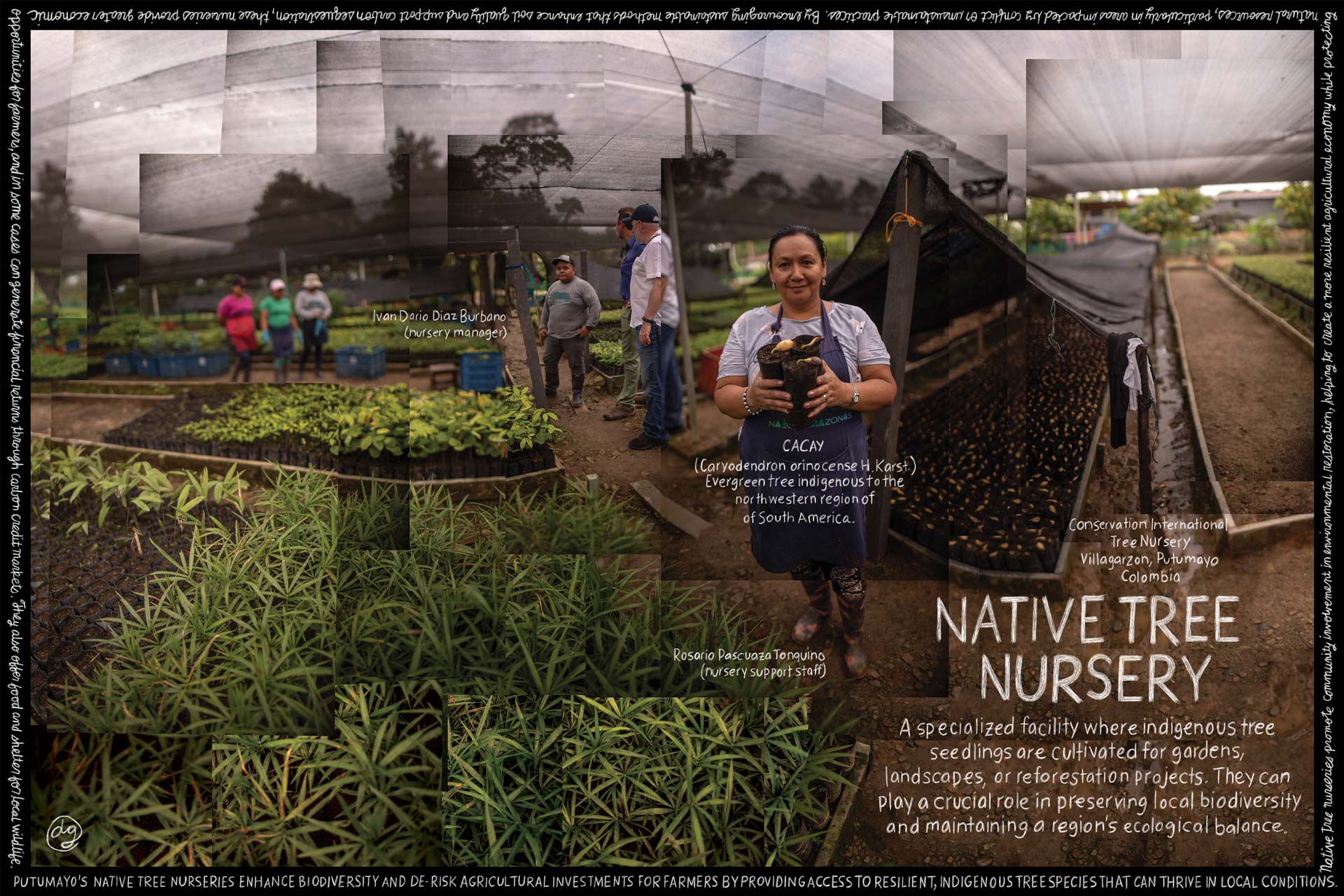
Nature-positive landscapes should be regenerative, aiming to restore degraded land by using local tree species whenever possible, which can simultaneously provide additional livelihood opportunities for local communities.
Nature-positive systems empower marginalized groups by promoting inclusive participation and decision-making, granting access to resources, leadership roles, and skills development, thereby fostering social equity and more diverse, inclusive communities. For instance, by promoting local seed systems, these systems shift resource control to farmers and other landscape users.
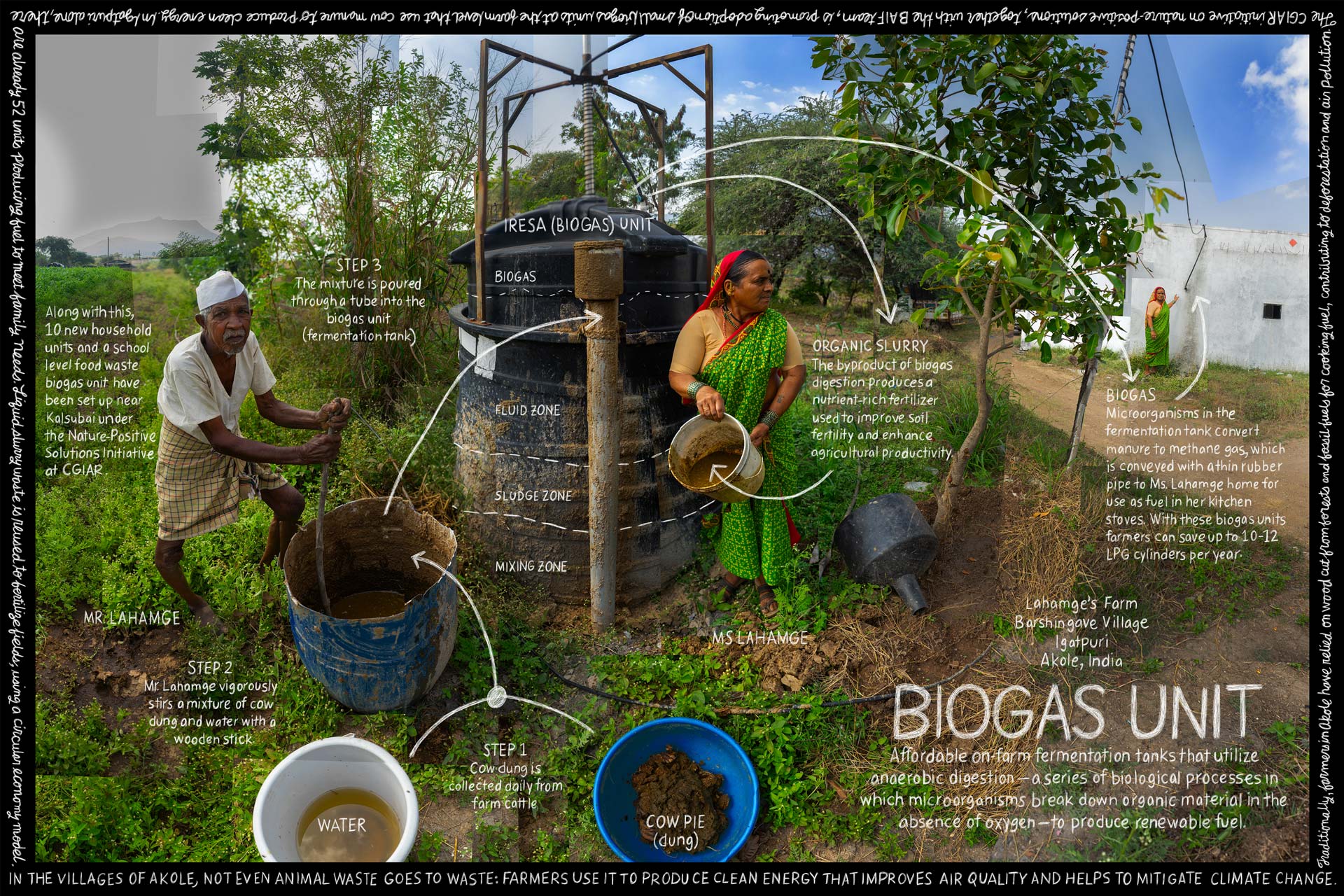
From an economic standpoint, nature-positive systems encourage the creation of small and medium enterprises (SMEs) at various stages of the value chain, focusing on a wide range of products, including food processing (flour, juices, jams, dried vegetables, dairy products), bio-inputs from recycling, and bio-energy from biogas. Transitioning to these systems requires policy support and investment to create viable business opportunities. Payment mechanisms for ecosystem services can provide an extra source of income for communities.
If fully implemented, these approaches will help farmers mitigate and adapt to the impacts of climate change by building more resilient food systems that sequester more carbon in the soil and withstand extreme weather events.
In conclusion, diversity-based, nature-positive practices protect and restore biodiversity, support healthier ecosystems, and ensure that food systems remain productive without depleting natural resources, while also improving the livelihoods of communities.
Natural resources stewards are communities or group of local individuals manage and owns the natural resources who are directly building relationship with the project developers.
More Lex Icons™

What is Nature-Positive?
In a landmark decision, Ecuador voted in 2023 to ban oil drilling in Yasuní National Park and halt mining in the Chocó Andino biosphere. This decision protects critical ecosystems in the Amazon and highland areas, safeguarding biodiversity and the rights of Indigenous communities.
The Living Planet Index has reported a shocking 69% decrease in global wildlife populations between 1970 and 2018. This trend highlights the steep decline in biodiversity caused by human activities such as deforestation, pollution, and unsustainable agricultural practices.
Senior Research Fellow
IFPRI
How do you define and measure “positive” in nature-positive solutions?
In simple terms, the “positive” in nature-positive solutions means that the approaches, practices, and policies humans use in agriculture cause overall good to the Earth rather than harm.
Technically, the term “positive” emerged to counterbalance the negative impacts of the global food system on the Earth’s ecosystems and climate stability. Ecosystems provide services to people, such as food, energy, medicine, and shelter; they also help regulate the climate and even provide social identity and personal inspiration.
However, human activities cause “net-negative” impacts on the Earth and threaten its ability to sustain life. An article in Nature describes this in scientific detail.
Nature-positive solutions are a set of co-developed and co-created agricultural and community practices that protect nature, sustainably manage natural resources, restore biodiversity and ecosystem services, and promote equitable change in the economic system and circular economy, while achieving food and nutrition security.
Measuring these positive impacts is not easy, but there are tools to do so. The Economics of Ecosystems and Biodiversity Agrifood Evaluation Framework provides guidance on measuring nature’s benefits and thus on nature-positive solutions.
The framework depicts eco-agri-food systems: there are “stocks” – produced capital, natural capital, human capital, and social capital. They comprise the capital base for production. Activities, inputs, and ecosystem services are visible and invisible “flows” in value chains that result in “outcomes” – qualitative and quantitative changes in that capital base. These outcomes have “impacts” on human wellbeing (environmental, economic, health, or social).
There are different ways to measure these impacts. “True cost accounting” is an approach that puts invisible costs of food production (environmental harm, child labor) into comparable monetary terms, which, when added to direct production costs (seed, fertilizer) show true costs of production. Other evaluation methodologies include life cycle assessment, value chain analysis, and modelling tools.
Projects or initiatives that combine both practices- and outcomes-based analyses to maximize the advantages of both approaches; practices-based methods tend to be highly efficient and cost-effective, while outcomes-based methods may provide more precise data on actual results.
More Lex Icons™

Agroecological practices can enhance food production by increasing ecosystem services. A study conducted in Spain found that farms implementing agroecological methods (like crop diversification and organic inputs) supplied more ecosystem services compared to conventional farms. These services include improved soil fertility, pest control, and pollination, which are crucial for sustainable food production.
A review of various studies showed that crop diversification within agroecological systems can increase overall agricultural production by a median of 14% compared to monoculture systems. This increase is attributed to improved biodiversity management, which enhances crop resilience, pest control, and soil health.
Head of Nature-Positive Agriculture
WWF International
Food Unit Lead
WWF-NL
It can, and should, yes.
As stated in WWF’s 2024 biennial landmark Living Planet Report ‘nature-positive production practices – such as agroecology, regenerative agriculture, conservation agriculture and climate-smart farming – can increase yields without additional inputs, while increasing diversity on the farm, restoring biodiversity and increasing carbon storage’.
Farming with, not against, nature is not a new concept. Although the more recent recognition for urgent transformation of our agrifood systems as essential to meet ambitious net-zero and nature-positive goals, has generated an exponential expansion of profile and traction. The UN Food System Summit in 2021 was instrumental in establishing a renewed and refreshed agenda on nature-positive production embracing 3 pillars: 1) protect natural systems and protected areas from new conversions for food production, 2) sustainably manage existing food production systems, and 3) restore and rehabilitate degraded systems. This was followed by the 2022 Montreal-Kunming Global Biodiversity Framework of the Convention on Biological Diversity, a collective common mission to reverse nature-loss by 2030 with full-recovery by 2050 signed by 196 countries.
Nature-positive is now increasingly embraced as a concept and goal to halt and reverse nature loss by 2030, and to achieve fully recovery by 2050.
Efforts are underway to agree safeguards and establish rigor and transparency in measuring progress towards these goals including, but not limited to, the Nature Positive Initiative which is building consensus on a universal set of metrics and launched a stakeholder consultation (October 2024) to ‘define a checklist of metrics that can provide the scale, diversity, credibility and completeness needed to give a sufficiently accurate picture of change in the state of nature’.
It is important to recognize the alignment but distinction between different approaches that resonate with different constituencies and across different geographies, building bridges between political, cultural and contextual divides.
The important common thread and shared North Star are the four Global Goals, and the exciting opportunity this presents to collectively demonstrate how sustainably managed agricultural lands can and must make a significant contribution to protect and restore ecosystems, prosper with nature, share benefits fairly and invest and collaborate to fully implement the GBF framework. Target 3 of the Global Biodiversity Framework calls for greater inclusion of sustainably managed agricultural landscapes, as Other Effective Area-based Conservation Measures (OECMs) and essential in meeting the goal of conserving 30 percent of land, waters and seas by 2030. Globally agreed criteria and methodologies will be needed to guarantee that agriculture land included in the 30% effectively deliver high standards of conservation and benefits to people.
The study of the relation of agricultural crops and environment. Agroecology is a holistic approach that seeks to reconcile agriculture and local communities with natural processes for the common benefit of nature and livelihoods. It is inherently multidisciplinary, including sciences such as agronomy, ecology, environmental science, sociology, economics, history and others.
More Lex Icons™
The implementation of nature-based solutions can be three to six times more cost-effective than traditional engineered approaches for climate adaptation.
The World Meteorological Organization emphasizes that the cost of climate inaction is significantly higher than the cost of taking action, reinforcing the need for effective environmental policies that prioritize nature-based solutions for resilience and adaptation.
Global Head, Nature-based Solutions
IUCN
Nature-based Solutions (NbS) were defined by UNEA 5 in Resolution UNEP/EA.5/Res.5 as “actions to protect, conserve, restore, sustainably use, and manage natural or modified terrestrial, freshwater, coastal, and marine ecosystems, which effectively and adaptively address social, economic, and environmental challenges, while simultaneously providing human well-being, ecosystem services, resilience, and biodiversity benefits.” This definition builds on the IUCN’s 2016 definition adopted in WCC_2016_Resolution_069, and IUCN fully endorsed the UNEA 5 resolution.
Nature positive solutions build on Nature positive definition by IUCN and denotes the concept and goal to halt and reverse nature loss by 2030, and to achieve full nature recovery by 2050. While Nature positive is an aspirational goal, we need Nature based Solutions that can help achieve the Nature positive Goals. While Nature positive solutions could be a complementarity of NbS and Policy actions to accelerate halting biodiversity loss, we note that also effective NbS at scale – in combination with change in policies, investments and financial flows from both public and private sector – could lead to achieving Nature positive Goals.
Nature-based Solutions are actions to protect, sustainably manage, and restore natural and modified ecosystems that address societal challenges effectively and adaptively, simultaneously benefiting people and nature.
More Lex Icons™

The IUCN Global Standard for NbS is a tool to help governments, communities, business and NGOs implement strong, effective NbS projects that are ambitious in scale and sustainable, prevent misuse and safeguard people and planet.
A study indicated that investments in these solutions could help protect and restore up to 2.5 million square kilometers of habitat, which is vital for numerous species globally.
Policy and Finance Advisor
IUCN
Nature-based Solutions Programme Officer
IUCN
Nature-positive is defined as halting and reversing nature loss by 2030, based on a 2020 baseline, and achieving full recovery by 2050. Contributions to “Nature-positive” (not solutions) are quantified contributions to the biodiversity components of the Global Biodiversity Framework (GBF). Contributions can be made by governments, civil society (including Indigenous people and local communities), and companies. The two components of biodiversity that are most easily addressed by these contributions are species (in the form of reducing the extinction risk of species) and ecosystems (in the form of improvements to the extent and/or condition of ecosystems). The delivery of these contributions requires the establishment of a baseline, against which delivery can be assessed – a target – and a means to assess progress toward that target. Contributions to reducing species extinction risk and improving the extent and condition of ecosystems can involve reducing the scope and severity of threats in specific areas and restoring habitats and ecosystems.
Nature-based Solutions (NbS), on the other hand, address societal challenges through actions to protect, conserve, restore, sustainably use, and manage natural and modified ecosystems, benefiting people and nature at the same time.
The IUCN Global Standard for NbS frames the impact of NbS into seven major realms of societal challenges that are critical to sustainable development: disaster risk reduction, economic and social development, human health, food security, climate change mitigation and adaptation, water security, and environmental degradation and biodiversity loss. NbS is, therefore, a broader approach that promotes the integration of nature into decision-making, and together with Nature-positive contributions, offers pathways towards a sustainable future.
Biodiversity conservation refers to the active protection, management, and restoration of the variety and variability of life forms within ecosystems. It aims to safeguard the intricate web of life on Earth, ensuring the survival of species, maintaining ecosystem services, and preserving genetic diversity for current and future generations.
More Lex Icons™
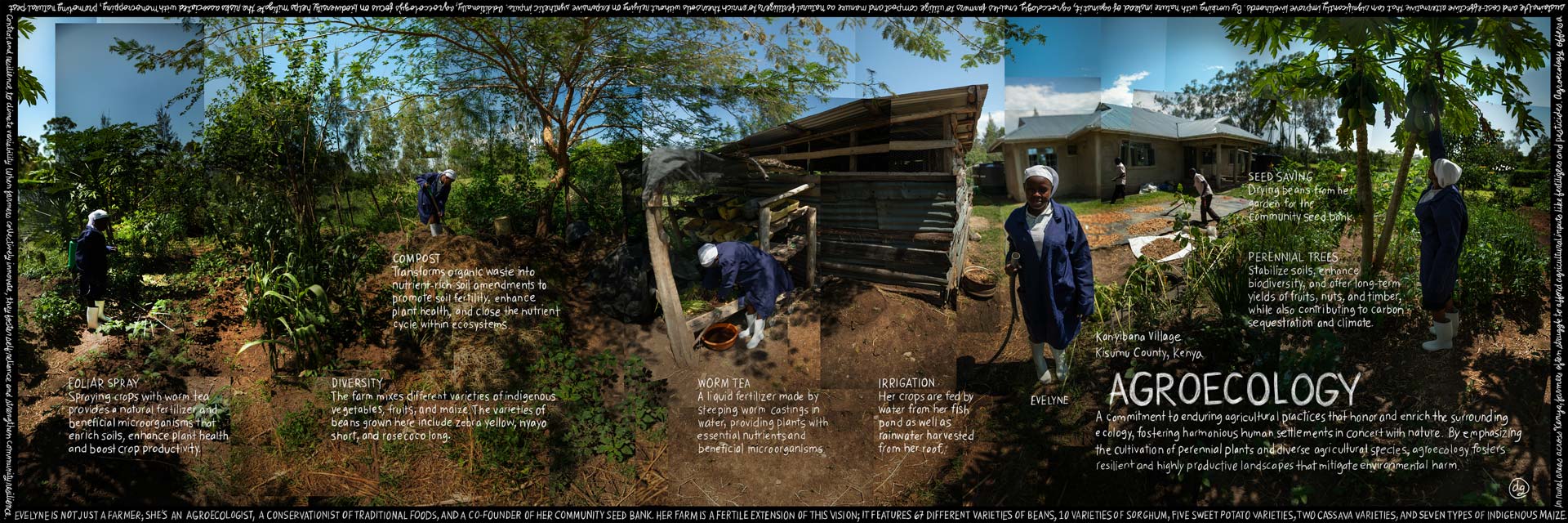
What are the components of a nature-positive food system?
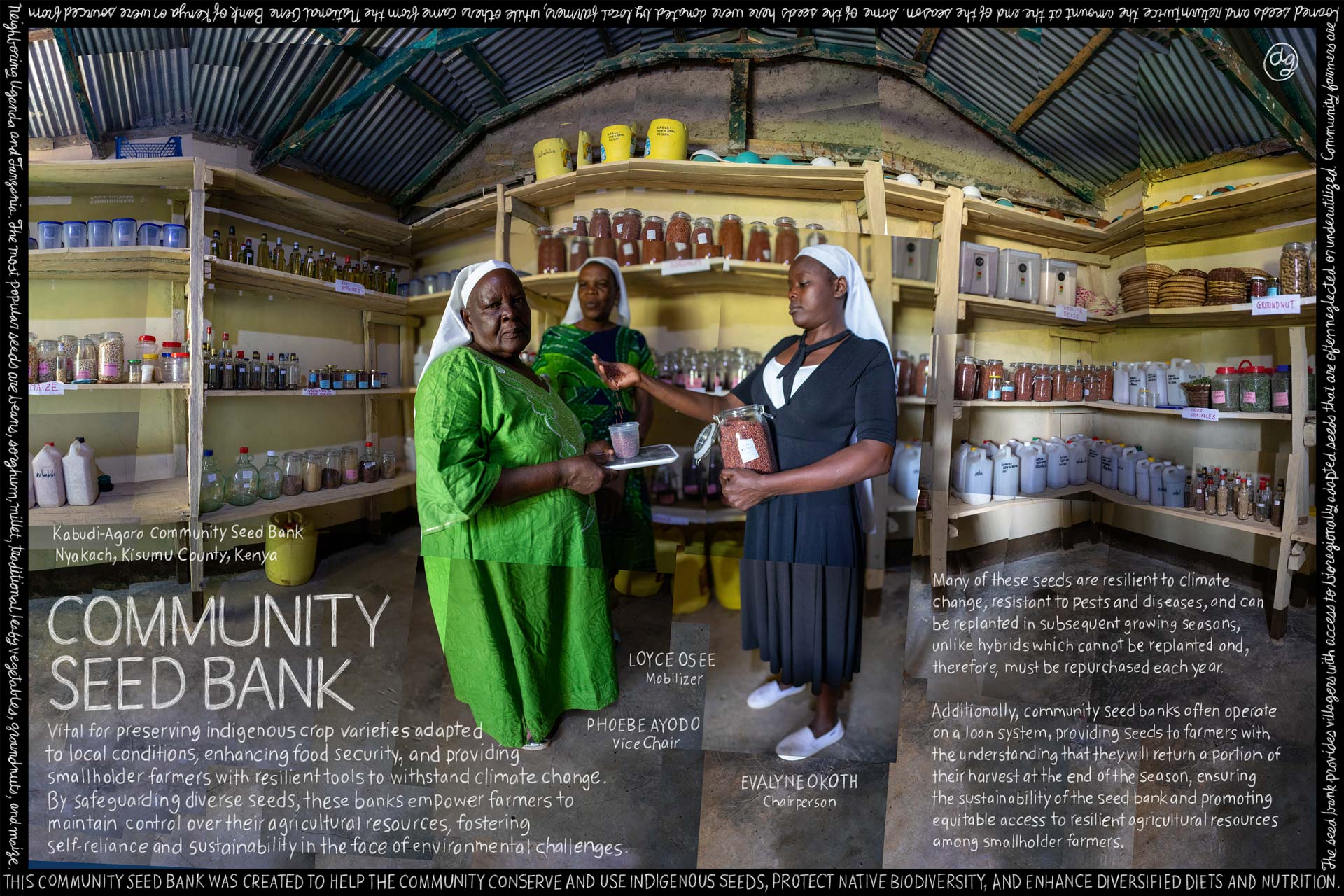
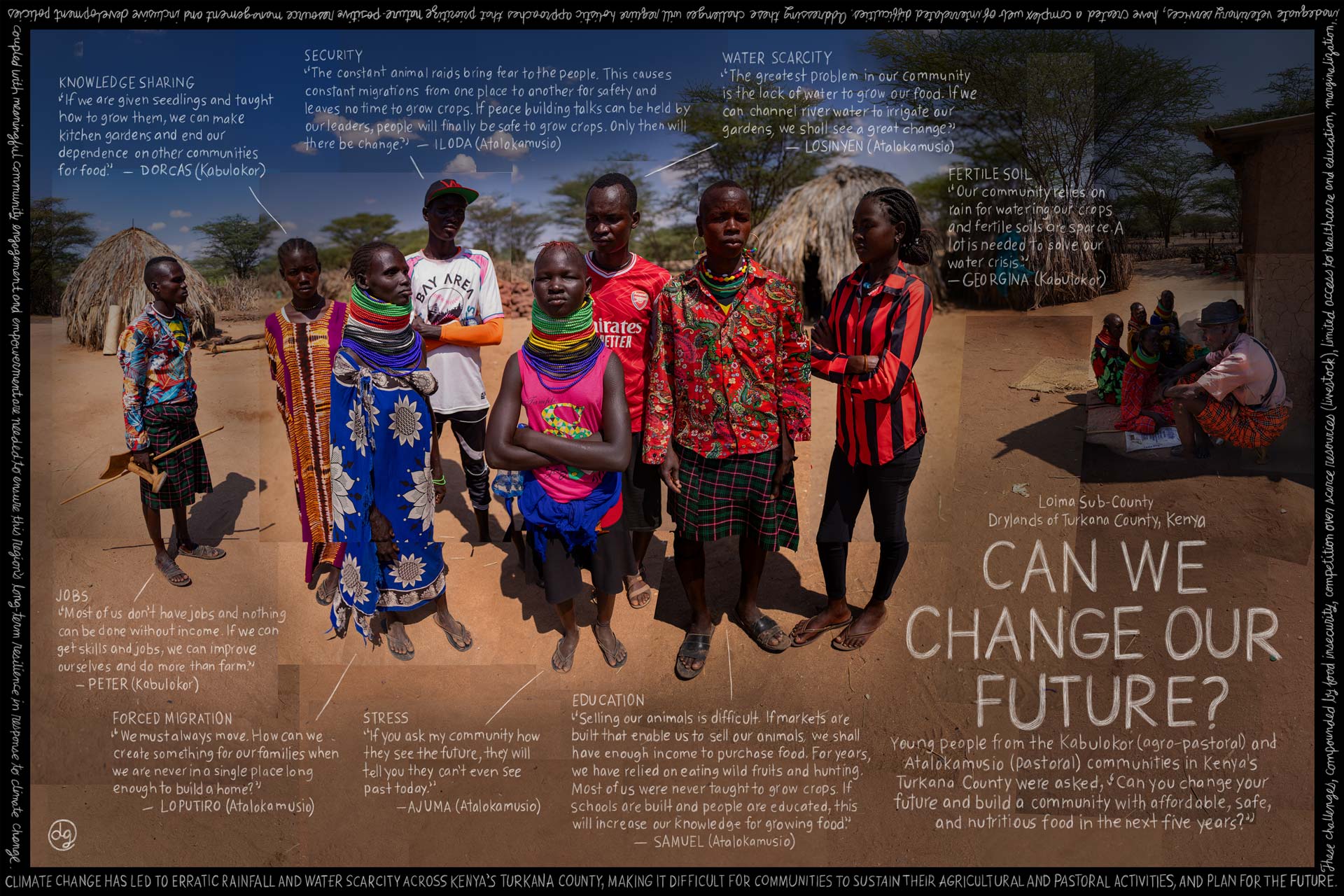
In Kenya, community seed banks have been crucial in enhancing food security for smallholder farmers. Since 2009, the Seed Savers Network has established 54 community seed banks across the country and documented 148 local crop varieties. This initiative has trained over 74,000 rural smallholders, enabling them to preserve indigenous seeds that are often more resilient to local climate conditions.
If women farmers had equal access to productive resources as men, agricultural yields could increase by 20-30%, which could potentially reduce hunger by up to 17%. Empowering women in agriculture is thus not only a matter of equity but also a critical strategy for enhancing food security
Founder and farmer
Kabudi Agoro Community Seedbank
What are the benefits of nature-positive solutions for a smallholder farmer?
As a woman farmer, I have seen firsthand the many benefits of using nature-positive solutions for smallholder farmers. One of the biggest advantages is that it helps reduce harmful gas emissions. For example, using black soldier flies to manage waste not only helps control waste but also reduces global warming. This approach allows smallholders to contribute to climate change mitigation.
Another key benefit is the change in mindset about waste. Instead of seeing waste as a burden, smallholder farmers learn to turn it into something valuable. By converting waste into biofertilizer or using larvae as poultry feed, we create wealth from what was once considered useless. This can save money and provide better nutrition for animals.
Nature-positive solutions also protect the environment by promoting the use of biochemicals that don’t harm beneficial microbes in the soil. This means that smallholders farm without disturbing the delicate balance of the ecosystem, allowing for the adoption of more sustainable practices.
Finally, nature-positive solutions bring farmers together. By working with others in the community to solve agricultural challenges—such as combining our small plots —we can achieve more efficient farming and share knowledge and resources for the benefit of all.
Coordinated efforts of multiple individuals, groups, or organizations working together towards a common goal or objective.
More Lex Icons™
Despite their crucial role in managing biodiversity, Indigenous peoples face severe threats from environmental degradation. Their livelihoods are increasingly at risk due to industrial activities, climate change, and policies that marginalize their rights. In 2022, there were over 1,500 legal cases against Indigenous individuals for alleged violations related to conservation laws, reflecting the tension between Indigenous rights and governmental conservation policies.
Scheduled Tribes (STs) in India make up about 8.6% of the country’s total population, according to the 2011 Census. This community is significantly diverse, consisting of around 705 distinct groups recognized across various states.
Program Director
BAIF Development Research Centre
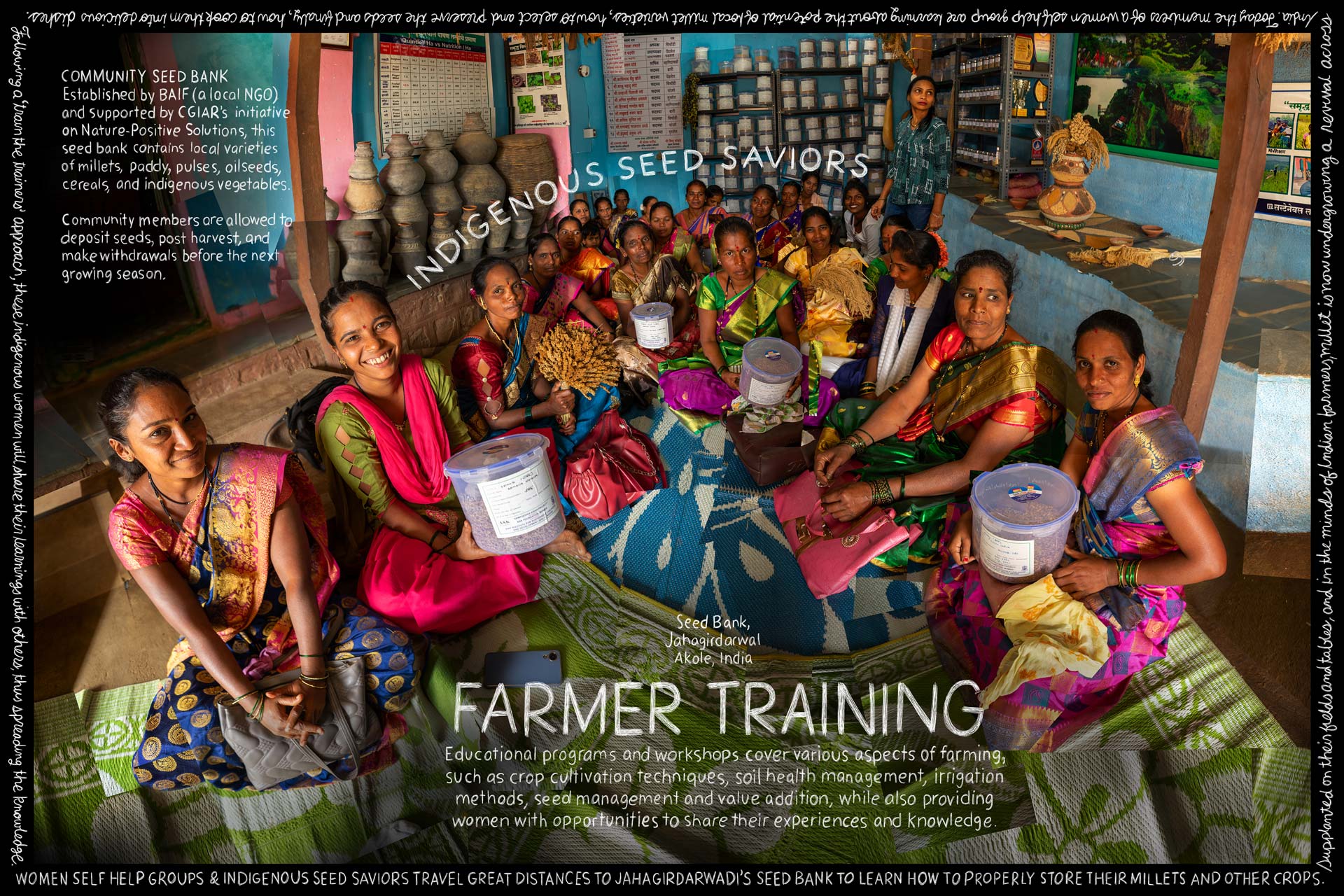
Indigenous communities have been custodians of traditional knowledge and local wisdom associated with many useful heritage agricultural systems. They have unique observations and preferences on seed selection, seed preservation, post-harvest value preservation, agroecology principles, beneficial insects, plant parts used, mixed and companion cropping, seasonality aspects, non-destructive harvesting methods, medicinal properties, unique traits of crops, and wild food resources.
These are important areas of research and inquiry for scientists. Hence, scientists can respect and partner with local communities to conduct such research in a participatory manner.
Scientists can use such crowd-sourced data to scientifically validate many claims and publish unique findings.
Scientists can train communities in adopting scientific methods of research and documentation for preserving knowledge and creating evidence. This can also ensure joint efforts to prevent biopiracy and ensure that local communities gain or share in any commercial use of knowledge or local resources. Scientists need to help demystify scientific terms and concepts so that local communities can understand them in a simple manner. A process of reverse anthropology, i.e., learning from Indigenous communities, is important, as these communities have historically lived in harmony with nature. Women especially act as repositories of such useful, nature-positive knowledge systems. Their preferences and choices are pro-nature. Apart from income, women give weight to many other considerations like food and nutrition security, resource efficiency, and circularity. Therefore, scientists should ensure that farm women are central to any future research and training.
A community-based platform can be created to ensure a bottom-up process of ideation, innovation, planning, research, and actions, involving both communities and scientists. While scientists are aware of the larger context and technical aspects, partnerships with the communities can help contextualize research and actions, making them relevant to a region and its needs.
The traditional practices and beliefs of indigenous communities regarding the use of plants for food, medicine, cultural rituals, and materials, reflecting their relationship with the environment and biodiversity.
More Lex Icons™
Approximately one-third of the world’s soil is degraded, impacting its ability to support food production, maintain biodiversity, and store carbon. This degradation is a major threat to global food security, as soil provides 95% of the food we consume. Soil erosion, loss of organic matter, and disruption of water cycles are key issues contributing to this problem.
Agroforestry systems, which combine trees with crops or livestock, have been shown to significantly improve soil quality, enhance biodiversity, and increase carbon sequestration. For instance, integrating legumes and trees into cropping systems boosts nutrient cycling and enhances soil organic matter, which can restore degraded lands and increase agricultural productivity.
Cropping System and Soil Scientist
Alliance Bioversity International and CIAT
How can agrobiodiversity help us build healthy soils and increase biodiversity?
Agrobiodiversity plays a crucial role in building healthy soils by promoting a diverse array of plant and microbial life both below and above ground. Diverse cropping systems and their root frameworks build and enhance soil structure and stability, biogeochemical cycling, and improve water balance. Different plant/crop species also bolster various plant growth-promoting microorganisms that contribute to organic matter decomposition, which increases richness and abundance, and thus soil fertility and health.
Conversely, healthy soils can significantly boost biodiversity. Soils rich in organic matter support diverse forms of life both below and above ground, from small microbes to large earthworms and insects, which contribute to nutrient availability and uptake while supporting environmental sustainability. Healthy soils promote plant growth and development, helping create diverse environments that can support a wide range of crop species.
Moreover, enhancing agrobiodiversity improves soil health, while healthy soils, in turn, uplift biodiversity, creating ideal conditions that enhance agricultural productivity and ecosystem sustainability. This exchange is fundamental for resilient food systems and overall environmental health.
A complex network of interactions among soil-dwelling organisms, including bacteria, fungi, protozoa, nematodes, and other microorganisms; plays a crucial role in nutrient cycling, organic matter decomposition, and overall soil health; fundamental for sustainable and productive agriculture.
More Lex Icons™

The Food and Agriculture Organization (FAO) estimates that globally, around 1.3 billion tons of food waste are generated each year, which could be significantly reduced through effective recycling practices. Recycling food waste into compost can enhance soil health and reduce greenhouse gas emissions, turning a problem into a resource
A study found that implementing circular economy practices in agriculture, such as composting and using crop residues, can lead to a 30% reduction in fertilizer use. This not only reduces farming costs but also minimizes environmental impacts, demonstrating the benefits of recycling agricultural waste
Nature-Positive Solutions Initiative Co-Lead
IWMI
Circular economy (CE) plays a crucial role in nature-positive solutions by reducing environmental impacts and enhancing ecosystem health.
CE seeks to decouple economic growth from the use of scarce natural resources, aiming for a waste-free world where all materials retain value and are reused for as long as possible. In nature-positive strategies, CE practices involve reducing waste and pollution by keeping products and resources in circulation through resource recovery, reuse, and recycling.
This includes transforming waste, such as agricultural by-products, into valuable products that enhance biodiversity, boost ecosystem services, and support local economies by creating circular value chains. Processes like composting organic waste contribute to regenerative agriculture, improving soil health and fostering biodiversity.
These approaches promote efficient natural resource use, support a low-carbon agricultural model, and minimize waste, aligning with nature-positive objectives such as ecosystem restoration, biodiversity enhancement, and climate resilience.
Business strategies that emphasize the continuous use and recycling of resources, creating economic value while reducing environmental degradation.
More Lex Icons™

The world is home to over 60,000 known tree species, with about 30% of these species found in tropical rainforests. However, about 1 in 5 tree species are threatened with extinction, primarily due to deforestation and climate change.
Certain regions have successfully reduced deforestation rates. In Brazil’s Amazon, for instance, deforestation decreased by 39% from the previous year, demonstrating the potential for effective conservation strategies to help maintain tree diversity.
Principal Scientist, Lead Tree Biodiversity for Resilient Landscapes
Alliance Bioversity International and CIAT
What is the role of planting trees in nature-positive systems?
Mainstreaming tree biodiversity for nature-positive agricultural transitions.
Planting trees plays a crucial role in nature-positive systems, which strive to harmonize agricultural and natural processes. Trees, both on farms and in forests, are vital to addressing the triple crisis of climate change, biodiversity loss, and food system failure and insecurity.
CLIMATE MITIGATION – Trees absorb carbon dioxide, acting as significant carbon sinks. A large-scale increase in tree cover in production landscapes can help curb global warming and contribute to reaching net-zero emissions targets in agriculture. Additionally, trees regulate local temperatures by providing shade and cooling through evapotranspiration. This cooling effect makes the local climate more amenable to humans, while trees also play a vital role in managing water cycles by improving soil moisture retention, reducing runoff, preventing floods, and recharging groundwater systems.
ENHANCED BIODIVERSITY FOR RESILIENCE – Tree planting supports ecosystems by providing habitats for diverse species of plants, animals, and microorganisms. Increased biodiversity leads to more resilient ecosystems that can better withstand environmental stressors such as pests, diseases, and climate fluctuations. Forest ecosystems, in particular, act as biodiversity hotspots, contributing to ecological balance and stability.
IMPROVED HUMAN NUTRITION AND LIVELIHOODS – Trees enhance food security by providing fruits, nuts, and other edible products, particularly for local communities, and are a vital safety net when annual crops fail. Agroforestry systems, which integrate trees with crops and livestock, improve soil fertility and crop yields. Moreover, forests and trees offer timber, firewood, and other resources that support livelihoods, especially in rural areas. These benefits help reduce poverty and promote sustainable economic development.
Current agricultural practices continue to remove tree diversity and reduce landscape complexity, contributing to the global decline in tree cover by more than 50% since humans began to cultivate the land. Nature-positive agriculture offers a system that reverses these trends, where planting trees and supporting natural forest regeneration are crucial to a resilient planet.
A tree species that naturally occurs in a specific region or ecosystem, playing an important role in local biodiversity, providing habitat, and contributing to the ecological balance of the environment.
More Lex Icons™

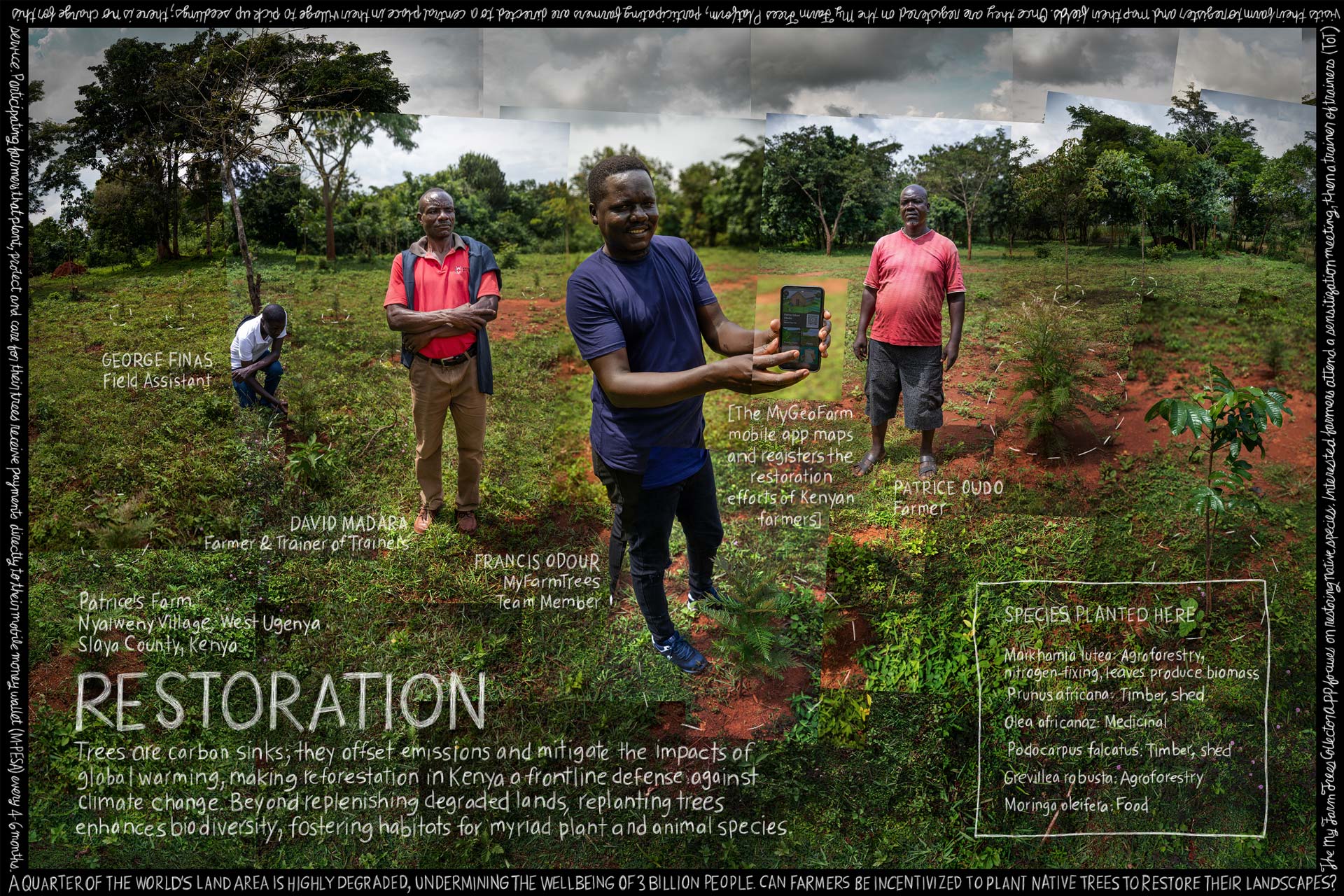
My Farm Trees is a platform to promote tree cover using native trees, and includes documentation, verification and quality control. It uses blockchain to create a transparent link of information from seed collection to tree growth – to improve livelihoods, food security and climate mitigation.
Diversity For Restoration is a tool developed to help with decision-making on the use of appropriate tree species and seed sources for tree-based restoration or other tree planting activities, originally designed for tropical dry forest in Colombia, and aimed at all those interested in planting or regenerating trees, including scientists, restoration planners and practitioners as well as public authorities, investors and donors
Director, Multifunctional Landscape
Alliance Bioversity International and CIAT
Restoring degraded land and ecosystems involves four key steps: (i) identifying priority areas for intervention, (ii) selecting the right basket of restoration options, (iii) matching interventions to the local context, and (iv) monitoring progress to generate real-time performance evidence. Given the logistical and economic challenges of addressing all degraded ecosystems, technologies like remote sensing, geospatial analysis, AI, and citizen science play a crucial role in identifying priority areas for restoration. These tools help pinpoint where interventions should occur and why they are necessary. Once priority areas are identified, the next step is determining what interventions are best suited to the local socio-economic and environmental conditions. Literature reviews, modeling, expert analysis, and participatory approaches can guide the selection of a tailored basket of restoration options. With interventions identified, the challenge becomes implementing them effectively. This involves matching specific solutions to particular locations within a landscape to optimize synergies and manage trade-offs.
Field surveys, modeling, and participatory methods can help in designing the most effective configuration of interventions across the landscape. Finally, generating evidence of the interventions’ performance is crucial. Near real-time data is essential for adaptive learning, informed decision-making, and reporting progress towards national and global commitments. Monitoring systems utilizing remote sensing, geospatial tools, AI, and participatory approaches provide the insights needed to assess impacts. These advances in digital technologies are revolutionizing ecosystem restoration, from data collection and analysis to visualization, empowering more effective and scalable solutions. Biotechnology such as genetic engineering, cloning, etc. is also becoming powerful technology in biodiversity conservation.
Digital tool designed to facilitate collaboration among various stakeholders, such as local communities, NGOs, and government agencies, in restoring ecosystems, communicate and record their impact.
More Lex Icons™

In African countries that upgraded their seed systems, farmers reported an increase in crop yields of 20 to 30% when planting improved varieties of maize, rice, and beans.
As of 2020, four companies controlled approximately 51% of the global seed market. This concentration poses risks for competitive pricing and may adversely affect food sovereignty and agricultural diversity
Senior Scientist on Andean Food Systems
CIP
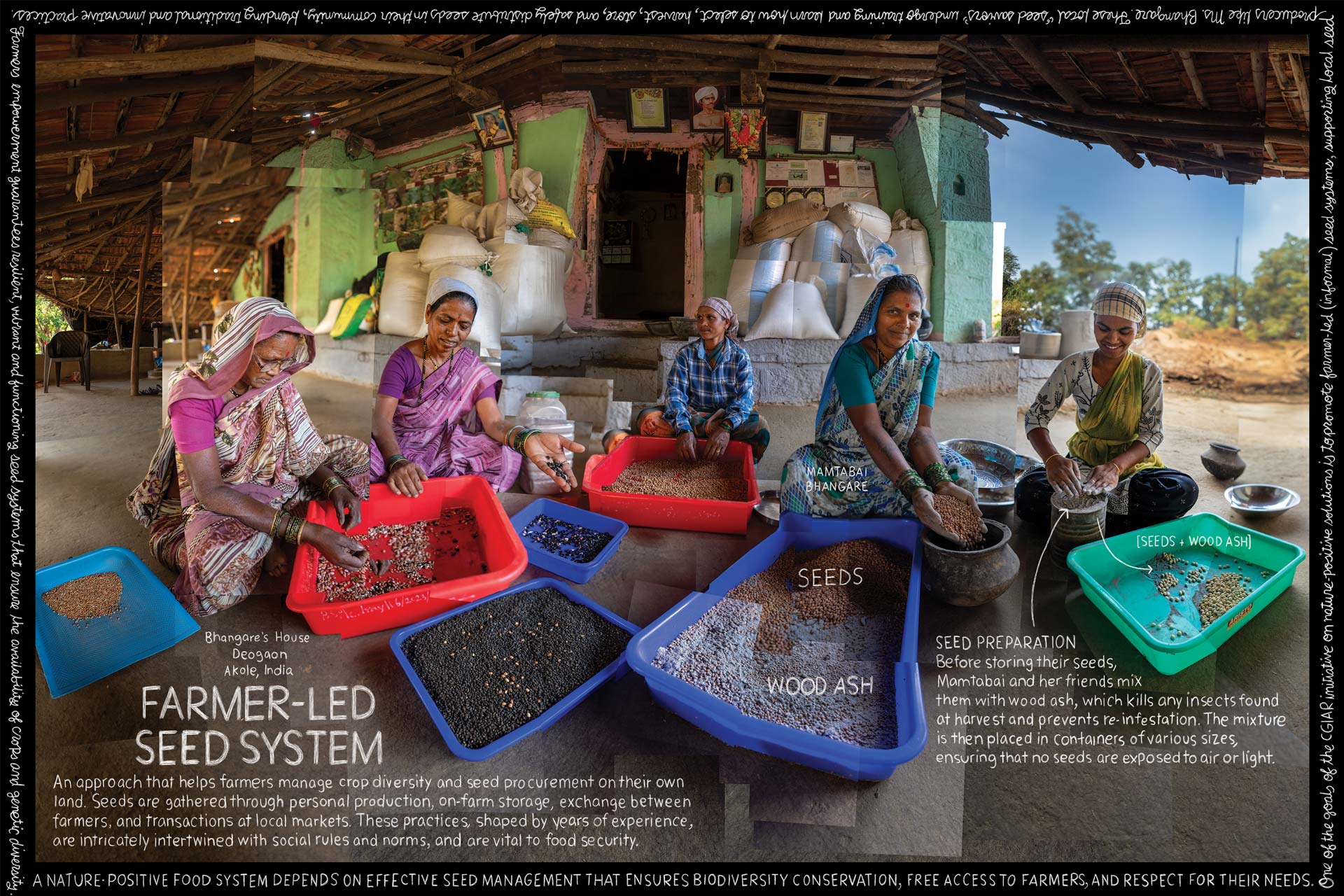
Farmer seed systems can distribute seed widely, in a decentralized manner based on trust and locally defined quality criteria. These seed systems offer flexibility, diversity and resilience in light of changeable demands. A key strength of farmer seed systems relates to their central role in adaptively reproducing crop genetic diversity. They can be perceived as an evolutionary time-machine channeling diversity from one season to the next and one farmer generation to the next. Without farmer seed systems there would be no such thing as conservation ecosystem services derived from the use of varietal diversity.
A seed bank (also seed banks or seeds bank) stores seeds to preserve genetic diversity; hence it is a type of gene bank.
More Lex Icons™

How do we spread nature-positive solutions?
Studies estimate that crossing a 1.5°C warming threshold could trigger cascading tipping points, leading to irreversible damage to global ecosystems, including the melting of the Greenland Ice Sheet and disruption of ocean currents.
ReFi DAO (Regenerative Finance DAO) is a decentralized organization focused on creating financial systems that support ecological regeneration and social well-being. Its mission is to leverage blockchain and Web3 technologies to promote sustainable, restorative economic models. Check this conversation with Refi DAO and The Lexicon on the Ecological Benefits Framework.
Co-Founder
The Lexicon
How can EBF be useful for explaining the impacts of a nature-positive solution?
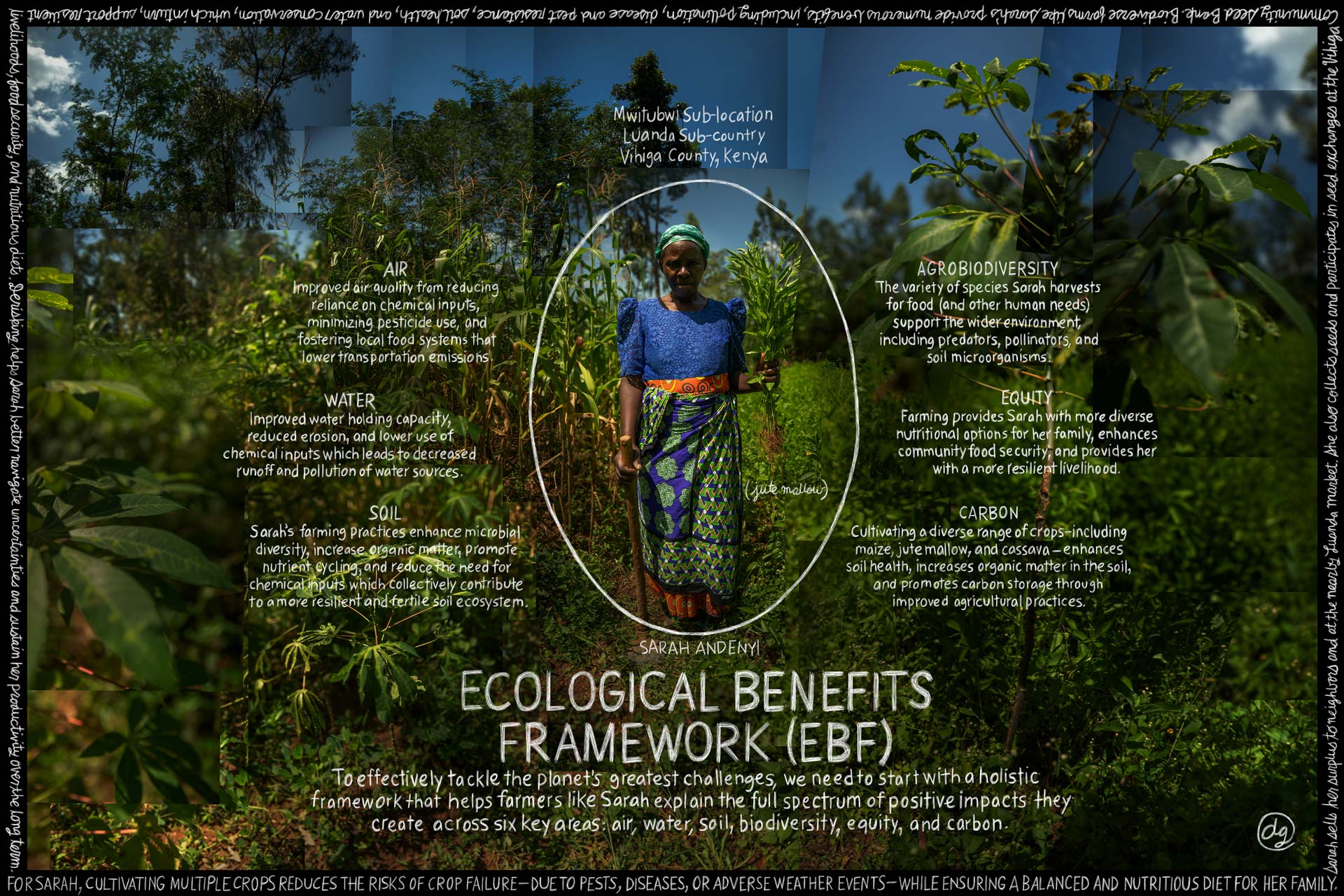
While climate change presents our planet with existential challenges, biodiversity loss, desertification, and water scarcity should be of equal concern. Since they’re all connected, addressing these threats requires a holistic approach, one that channels our collective energies where they matter most. These actions can be called nature-positive solutions. They take place across six domains—air, water, soil, biodiversity, equity, and climate—and offer a useful approach for tracking impacts. This is called the Ecological Benefits Framework.
Nature-positive solutions aren’t currently backstopped by certifications or third-party verifiers. Instead, they’re a movement spanning conservation and agriculture, a loosely defined yet practical set of agreements and actions that transport us from extractive to restorative, top-down to bottom-up, subsidized to self-supported. However, this lack of formal structure impedes the flow of capital to underwrite and de-risk these activities.
It is critical to measure success and impact. Traditionally, quantitative tools performed these tasks. They established baselines. Made assessments over fixed time frames that extended into the future. Except, time is one luxury we no longer have. To speed things up, quantitative tools have rapidly evolved, enhanced by digital information gathered by satellites, remote sensors, and AI. While these above the canopy technologies provide valuable insights across vast landscapes, they often come at the expense of qualitative data, and by extension, devalue the vital importance of indigenous knowledge below the canopy, where the change needs to happen.
How can we reconcile the quantitative with the qualitative? How can we convince stakeholders following different pathways to share a common destination? The tech sector faced a similar problem. Imagine what would have happened if every smartphone needed its own proprietary protocol to speak to each smart device. Luckily, Bluetooth was created. Its digital handshake offered guaranteed interoperability between devices and rapidly accelerated the technological advances we have today.
Can we create a digital handshake for the planet?
The Ecological Benefits Framework—air, water, soil, biodiversity, equity, and climate—respects different approaches to nature-positive solutions while helping us visualize their collective impacts across common goals. Creating this alignment, this digital handshake, will rapidly accelerate the deployment of strategic capital for nature-positive solutions to where it’s needed most to create measurable, life-affirming ecological impacts.
Engaging and consulting with local communities, indigenous peoples, and other stakeholders affected by carbon market projects to ensure their meaningful participation in project planning, implementation, and benefit sharing.
More Lex Icons™

Research indicates that youth agripreneurs in Uganda are increasingly engaging in entrepreneurial activities, which are vital for economic growth in rural areas. These initiatives not only help young farmers gain essential skills but also contribute to local food security and economic stability
SMEs that participate in incubation programs have been shown to have a much higher survival rate compared to non-incubated firms. Research indicates that incubated businesses have a survival rate of about 87% after five years, as opposed to only 44% for non-incubated SMEs.
Innovation Hub Coordinator
IWMI
To make circular innovations available to farmers and entrepreneurs, we must prioritize building strategic, robust partnerships grounded in effective collaboration and sustainable financing models.
This will allow us to: 1. Deliver capacity-building initiatives to equip farmers and entrepreneurs with the skills to identify challenges and contribute to the innovation process. 2. Co-develop context-specific innovations that are practical and directly address the needs. 3. Co-create Clear Pathways for Scaling and Uptake: Design pathways that remove barriers, ensuring innovations are easily scalable and available for widespread adoption.
Achieving this requires platforms that unite stakeholders in innovation, financing, and end-user engagement. By aligning their efforts, a holistic approach is adopted that ensures innovation development and scaling pathways are designed concurrently. This removes barriers to availability and increases the potential for widespread adoption. A prime example is Ghana’s Circular Bioeconomy Innovation Hub, established by IWMI and partners as part of the CGIAR Initiatives on Resilient Cities and Nature-Positive Solutions. Operating as a multi-stakeholder platform based on co-ownership principles, it unites diverse stakeholders to pool resources to drive innovation and uptake in the organic waste-to-resource value chain.
One standout feature of the hub’s resource-pooling strategy is the concept of Living Labs—dynamic spaces hosted by circular bioeconomy businesses and research centers that co-own the hub. These Living Labs provide real-world settings where practical solutions in implementation can be showcased, optimized, and adapted through capacity building and research. By leveraging the existing infrastructure and resources of its co-owners, the hub minimizes the need for heavy new investments. Instead, it focuses on showcasing, adapting, and innovating while simultaneously building the capacity of end users—all within a single, integrated setting. This exemplifies the concurrent approach to innovation development and scaling described earlier.
In conclusion, making innovation available to farmers and entrepreneurs hinges on strong partnerships for collaborative platforms and sustainable financing. The Circular Bioeconomy Innovation Hub exemplifies this approach, uniting stakeholders to scale innovations through shared resources.
A structured and supportive initiative designed to nurture the growth and development of small businesses. In these programs, entrepreneurs receive various forms of assistance, guidance, and resources to help them establish and expand their ventures successfully.
More Lex Icons™

The State of Finance for Nature annual report series tracks finance flows to nature-based solutions (NbS) and compares them to the finance needed to maximise the potential of Nature based Solutions to help tackle climate, biodiversity and degradation challenges.
The crypto industry is increasingly being viewed as a potential ally in the fight against climate change. An initiative called the Crypto Climate Accord aims to make the crypto industry carbon neutral by 2030. This could facilitate significant financial investments towards sustainable projects and technologies, thus helping mitigate environmental impacts.
Environment and climate specialist
International Fund for Agricultural Development (IFAD)
The Global Biodiversity Framework (GBF) stipulates that the international community should mobilise $200bn per year until 2030, including $30bn through international finance, to implement national biodiversity strategies and action plans in line with GBF goals and targets (protecting and restoring nature, sustainably using and managing nature, sharing its benefits fairly and improving collaboration). The below approaches and instruments can help achieve this target.
Without reversing nature-negative finance flows, increased finance for nature is ineffective. Investment needs for land restoration have already doubled in 2025 due to land degradation. Subsidies harmful to nature amount to 1.7 trillion USD, a 55% increase since 2022 despite the GBF targets (UNEP State of Finance for Nature 2023). Hence, the first priority is to reform harmful subsidies. Some countries are leading the way (India’s Andra Pradesh Zero Budget Natural Farming; UK’s Single Payment Scheme, etc). Subsidies can take the form of direct subventions, tax alleviations or import tariffs (among others). Reforming them is the first step to financing nature-positive solutions.
International financial institutions are also increasing concessional finance (grants and loans) for nature-positive solutions by setting dedicated targets and aligning their climate finance flows to nature objectives. The International Fund for Agriculture Development (IFAD) committed 30% of its climate finance to be delivered through nature-based solutions by 2030. In their Joint Statement at COP27, MDBs committed to boosting nature-positive finance, recognising that “the climate and ecological crises are intertwined”. According to an OECD review, the majority of this finance goes to: general environmental protection (65%), agriculture (23%) and water and sanitation (20%).
In the private sector, most common nature-positive investments include biodiversity offsets and credits (11.7bn), payments-for-ecosystem services (PES) (3.5bn) and direct investments in certified supply chains (8.6bn), specifically on agriculture and forestry products (UNEP, 2023). To institutionalise PES, models like the Upper Tana-Nairobi Water Fund, initially supported by IFAD are being scaled across Africa. Resources are pooled from downstream water users to finance upstream restoration activities that improve water quality. In Vietnam, IFAD facilitated PES around Ba Be Lake, linking tourism revenues from operators with forest protection and waste management.
Still, financing nature-positive solutions is considered risky. Return on investments are difficult to quantify and mostly realised over the long-term. De-risking instruments, including guarantees and debt-swaps, are critical to ensure that finance is channelled to nature-positive solutions. IFAD does de-risking through matching grants, providing matching grants to complement beneficiaries’ investments in nature-positive solutions can buy down risk and work to drive access to credit with financial institutions.
A range of offerings, including loans, savings accounts, insurance, investment options, and financial planning, designed to meet individual and business financial needs and goals.
More Lex Icons™

People food and income depend on Reliance on biodiversity: 70% of the world’s poor depend on wild species, 1/5 people rely on wild plants, algae and fungi for food and income, 2.4 billion rely on fuel wood.
Almost $7 trillion is currently invested annually in practices that are detrimental to the environment globally. What would happen if we convert them into nature-positive investments?
Senior regional technical specialist, Biodiversity, Environment, Climate, Gender and Social Inclusion Division
International Fund for Agricultural Development (IFAD)
While many people and organizations care about nature, that alone is not enough to drive investments. We need to clearly demonstrate why and how investing in nature matters. At IFAD, for example, we support governments in investing in rural development and food systems to combat poverty, tackle food insecurity, and create jobs. Our focus is on helping the most vulnerable households, especially in fragile contexts. We can’t ask people or governments to choose between nature, food, and livelihoods. Instead, we must develop solutions that benefit all. For instance, nearly two-thirds of our investments promote agroecological transitions, including regenerative agriculture, agroforestry, and ecosystem restoration—well-recognized nature- and climate-positive approaches that also deliver social and economic gains. Here are a few examples of how we build the case for nature positive in IFAD investments.
NATURE-POSITIVE FOR NUTRITION-POSITIVE – In Laos, IFAD strengthened nature-positive solutions by demonstrating their contribution to improved nutrition, which was the project’s core objective. By raising awareness about health risks related to pesticide use and the importance of dietary diversity, IFAD made a strong case for agrobiodiversity and agroecological practices. Additionally, by highlighting how rural households depend on forest products for both nutrition and income, IFAD is able to incorporate activities to conserve and restore nearby forests.
NATURE-POSITIVE FOR CLIMATE AND INCOME – In the Philippines, the CHARMP2 project promoted agroforestry and afforestation in the Cordillera mountains, with an initial focus on their environmental merit. Indeed, agroforestry systems can reach 50 to 80% of the biodiversity of natural forests meanwhile having high carbon sequestration potential per hectare. However, for farmers to maintain these trees in the long-term, the benefits must be clear to them. The project succeeded at a lower cost than similar initiatives by placing communities at the center, ensuring agroforestry systems were designed around local knowledge and needs. This allowed people to select species that were most useful and adapted to their environment. As a result, agroforestry improved nutritional diversity, boosted income streams, and increased resilience to climate change.
NATURE-POSITIVE FOR POSITIVE FINANCIAL RETURNS – Economic argument remains paramount for farmers and government. IFAD has been collaborating with the global resource centre for nature-based infrastructure to build the business case for green infrastructure in Eswatini and Kenya, demonstrating economic value of investments in agroforestry and afforestation. Such analysis can also help identify new revenue streams to address eventual profitability gaps. For instance, IFAD has been supporting payment for environmental services in several projects.
The compliance entry point: To scale and systematize nature-positive solutions, organizations must establish clear processes, set targets, and hold themselves accountable. To encourage this, the Global Biodiversity Framework includes targets for organizations to disclose their dependencies, risks, and impacts on nature and to mobilize financing for nature. Companies may be penalized or rewarded by investors and clients based on their environmental impact, further strengthening the case for nature investment. At UNFCCC COP26, ten multilateral development banks (MDBs) signed a Joint Statement on Nature, People, and Planet, committing to promote nature-positive financing. Similarly, IFAD aims for 30% of its climate finance to support nature-based solutions by 2030 and also promotes more systematic ex-ante biodiversity impact assessments using dedicated indicators. Looking ahead, IFAD is also preparing an updated strategy to further incentivize nature-positive investments.
A person or organization that distributes resources (e.g., money, credits) into projects or initiatives with the expectation that their allocation will generate multiple benefits (e.g., financial return, positive ecological impact).
More Lex Icons™

This pack focuses on the principles, standards, and components that enable different data systems, tools, and platforms to work together seamlessly. It includes concepts such as data harmonization, metadata standards, APIs, and system integration within CGIAR MELIAF ecosystems.
The pack supports the development of interoperable MELIA systems across programs and geographies, including integration with national systems such as those in Kenya. It is particularly useful to spread a mindset of collaboration and integration, allowing consistent data exchange between partners, improving efficiency, transparency, and comparability of results across projects.
Stage of development describing how well MELIAF standards, systems and practices are adopted and consistently applied, typically ranging from ad hoc use to fully embedded, continuously improved alignment.
Consistency between ToCs, indicators, evaluations and impact models regarding how change is expected to occur, ensuring all MELIAF components reflect the same underlying causal logic.
Sequenced chain linking activities, outputs, outcomes and impacts, including intermediate changes and feedbacks, used to visualize and test how interventions are expected to generate results.
Structured hierarchy of impact areas, outcomes and outputs used to organize, monitor and report contributions, ensuring MELIAF data and evaluations align with agreed strategic results architecture.
Conformance with agreed standards, protocols, procedures and governance rules that regulate how MELIAF data, indicators, models and evaluations are designed, implemented, shared and reported.
Reasoned explanation of how an intervention influences observed changes, distinguishing contribution from attribution and drawing on evidence and counterfactual thinking in MELIAF.
Curated list of allowed terms and definitions for concepts, indicators, themes or tags, used to standardize language and reduce ambiguity in MELIAF data and documentation.
Capacity of datasets from different sources to be combined, compared and reused without manual rework, thanks to shared formats, identifiers, metadata, semantics and access protocols across MELIAF functions.
Degree to which plans, ToCs, indicators, data standards and modules are intentionally specified to fit a common reference model, enabling coherent MELIAF implementation across projects and portfolios.
Ability to follow reported figures, findings and claims back through models, analyses and datasets to original sources, enabling verification and strengthening credibility of MELIAF products.
Compatibility of mandates, decision rules, accountability arrangements and oversight processes that enables multiple institutions to jointly steward MELIAF data, standards and evaluations.
Bringing together data, tools, workflows and governance arrangements so MELIAF activities function as a connected system rather than fragmented, stand‑alone components.
Ability of diverse systems, processes, and actors to exchange, interpret, and use data, concepts, and insights so that monitoring, evaluation, learning, impact assessment and foresight activities operate as a coherent whole.
Foundational elements—standards, identifiers, schemas, APIs, governance rules and capacities—required to make MELIAF data, processes and tools connect, communicate and evolve together.
Relationship between level of interoperability achieved and the cumulative resources required, highlighting how early investment in standards and alignment can reduce marginal costs of connecting additional MELIAF systems.
Networked representation linking entities, indicators, documents, ToC elements and outcomes via typed relationships, enabling MELIAF users and algorithms to explore and infer connections.
Organization of data and documents into explicit, standardized formats that software can reliably parse, validate and process without manual intervention in MELIAF workflows.
Agreed set of fields, formats and vocabularies describing datasets, indicators, models and documents so MELIAF assets are findable, understandable, and reusable by humans and machines.
Baseline requirements for articulating ToCs, causal pathways, assumptions and evidence links so that MELIAF activities consistently express and test shared causal logic.
Core structure, definitions, disaggregations and metadata required for key performance indicators to ensure comparability, integrity and machine‑readability across MELIAF systems.
Lean specification of variables, formats and metadata required for reporting results so that monitoring and evaluation data can be aggregated, compared and reused across initiatives.
Formally specified set of concepts, relationships and rules describing a domain, providing a machine‑interpretable backbone for MELIAF data integration, reasoning and advanced queries.
Extent to which MELIAF workflows, timelines and decision procedures can interact and synchronize across initiatives, enabling joint planning, shared reviews and consistent reporting with minimal friction.
Ability of tools, dashboards, models, reports and evaluation products to plug into each other’s data structures, semantics and interfaces, allowing reuse and composition in MELIAF workflows.
Category describing a point along the results chain—such as input, activity, output, outcome or impact—used to classify indicators, data and findings in MELIAF systems.
Formal structural blueprint describing entities, fields, relationships and constraints in a dataset or database, providing a shared template for MELIAF data creation, storage and exchange.
Records that follow an agreed schema’s field definitions, types, relationships and constraints, enabling automated validation, integration and analysis across MELIAF systems.
Shared conceptual representation that maps data fields, indicators and entities to well‑defined meanings, enabling consistent interpretation and integration across MELIAF tools and datasets.
Commonly agreed narrative and diagram of how activities, outputs and outcomes are expected to contribute to long‑term impacts, serving as a reference for MELIAF planning and assessment.
Specific, time‑bound value set for an indicator, expressing expected performance and guiding planning, monitoring and accountability within MELIAF.
Consistency and non‑overlap of terms, categories and indicator labels so that MELIAF data, ToCs and reports use a shared conceptual vocabulary across scales and disciplines.
High‑level, often system‑wide metric that tracks progress on priority outcomes or impacts and is mandatory for aggregation and external accountability within MELIAF.
Intermediate‑level metric that supports comparative analysis across programs or regions, offering flexibility while retaining alignment with the overarching results framework.
Context‑specific metric tailored to project or initiative needs, supporting local learning and management while remaining mappable to higher‑tier indicators when needed.
Explicit mapping between elements of a Theory of Change and projected benefits in quantitative models, ensuring consistency between narrative causal logic and forward‑looking analysis.
This thematic pack covers concepts, terminology, and visual elements related to the design, testing, and scaling of innovations within agrifood systems. It includes terms such as innovation bundles, TRL, scaling pathways, and usage models, with attention to enabling environments and partnerships. The pack supports users in illustrating how innovations move from research to widespread uptake across diverse contexts.
It can be used in MELIAF-aligned reporting, proposal design, and learning products to show how innovations are introduced, refined, and expanded. It is also useful in interactive dashboards and pathway visualizations that track adoption levels, scaling readiness, and systemic change over time.
Innovations, solutions or conditions that are necessary to scale core innovations.
Innovations that are at the heart of initiatives/ interventions and that are expected to contribute to transformation and impact at scale.
New, improved, or adapted outputs or groups of outputs such as products, technologies, services, organizational and institutional arrangements with high potential to contribute to positive impacts when used at scale.
Combinations of interrelated innovations and enabling conditions that, together, can lead to transformation and impact at scale in the CGIAR research delivery hierarchy.
Organizations or entities that CGIAR collaborates and co-invests with to improve the readiness of innovations to contribute to impact at scale.
A metric used to assess the maturity of an innovation, with a scale ranging from the idea (lowest level) to validated under uncontrolled conditions (highest level).
Number of research and development innovations by stage, where the stages are: i) end of research phase (discovery/proof of concept); ii) end of piloting phase (if relevant); iii) available for uptake; iv) uptake by next user.
A metric used to assess the extent to which an innovation is already being used, by which type of users and under which conditions, with a scale ranging from no use (lowest level) to common use (highest level).
Investments, strategies and processes aimed at increasing innovation readiness and/ or innovation use to contribute to positive impacts at scale.
Tracks how innovations, evidence, or policy advice move through next user/boundary partner institutions and systems to support long-term impact pathways.
Organizations or entities that CGIAR collaborates with to advance the uptake and use of innovations at scale.
Metric that combines single or average innovation readiness and innovation use scores at innovation package or portfolio level.
Evidence-based approach to support the design, implementation, monitoring and evaluation of strategies to increase readiness and use of innovations at innovation package and/or portfolio level.
These are the major domains of long-term change targeted by CGIAR. It includes standardized terminology and icons that align with CGIAR impact frameworks.
The pack is useful for showing strategies, aligning projects with CGIAR-wide priorities, and communicating contributions to global goals. It can be used in reports, proposals, and visual tools to map how activities and outcomes contribute to specific impact areas.
Improving small-scale producers’ resilience and reducing greenhouse gas emissions from food systems.
Increasing productivity in food systems while staying within environmental boundaries and maintaining biodiversity.
Closing the gender gap and enhancing opportunities for youth in food, land, and water systems.
Ending hunger and enabling safe, affordable, healthy diets for the world’s most vulnerable people.
Building on a 50-year track record of lifting millions out of poverty.
This pack focuses on the types, sources, and management of data used within MELIAF systems, including datasets, data governance, and quality standards. It includes terminology and icons related to data collection, storage, sharing, and analysis.
This collection can be used in MEL Plans, dashboards, and documentation to represent data flows and assets.
Documentation kept by farmers or field staff recording agronomic activities, inputs, and outputs over time to generate detailed panel data at the plot level.
Structured listing of existing datasets, their characteristics, and accessibility that guide new data collection and help researchers avoid duplication.
A ready-for-analysis dataset that has been checked and corrected for errors, inconsistencies, and missing values.
Ongoing verification of incoming data for completeness, consistency, and plausibility throughout collection and entry. Continuous data validation can be used to safeguard data quality before analysis.
Systematic processing and examination of collected qualitative, quantitative, and administrative data to identify and organize patterns within sources or samples (such as people, plants, animals, crops, soils, economics, climate, or water systems).
An outline of required datasets, base parameter values, resolution scales, and scenario assumptions, including sources, normalization methods, validation, and quality checks that serves as the basis for implementing simulation model runs. Data and assumptions plan plans help modeling teams coordinate data acquisition and support transparency and replicability when developing simulation models and generating scenarios.
Intellectual Assets that are raw or manipulated datasets and information products produced by CGIAR, as outputs of CGIAR’s research and development activities.
The process of using defined tools and protocols to systematically gather both measurements and observations about study system variables like people, plants, animals, crops, soils, economics, climate, or water systems.
Techniques or approaches determined through methodological design that define how information is/will be gathered from different sources or samples (such as people, plants, animals, crops, soils, economics, climate, or water systems).
Specific instruments, devices, or guidelines that are used to to capture and record data from sources or samples (such as people, plants, animals, crops, soils, economics, climate, or water systems) is gathered. Data collection tools operationalize data collection methods and may include questionnaires, interview guides, observation checklists, sensors, and data.
Activities concerned with assessing and improving the merit or worth of data collection, aggregation, cleaning, and management, as well as its compliance with given standards.
Aligning variables, formats, units, and coding schemes across datasets to create interoperability and allow for combination or comparison. Harmonization is crucial for meta‑analysis and global or regional modeling.
Socio-economic data collected on farmer characteristics, decisions, perceptions, and outcomes, often at the household level.
High‑quality, location‑specific observations collected on the ground used to validate or calibrate remote‑sensing products and models. Ground‑truth data ensures spatial and modeled estimates reflect reality.
Documentation on harvest quantity, quality, losses, and timing. Harvest records are central to yield measurements and economic analysis.
Existing datasets from past time periods, including surveys, administrative records, and gridded climate or yield series for use in trend analysis, baselines, and model calibration.
Data collected without experimental manipulation, such as administrative records or routine surveys. These data are widely used and require careful causal reasoning when used for impact estimates.
All data collected at the plot level, including inputs, management, yield, and environmental conditions.
The data observed or collected by a researcher, evaluator, or M&E professional from first-hand experience, specifically for the research project or area of interest.
Assembled datasets and visualizations that present modeled trajectories of key indicators under different scenarios. Foresight approaches often use such projections to communicate possible futures and impacts of options.
Data collection conducted temporally proximal to the events of interest, minimizing recall issues and allowing near‑real‑time monitoring.
Types of surveys that collect information about past events or practices, relying on recall.
Data products derived from satellite observations, such as land cover, vegetation indices, and weather proxies. Satellite datasets complement ground data and support large‑scale environmental and agricultural analysis.
Data that has been collected for another purpose but may be reanalyzed in a subsequent study.
Information differentiated on the basis of what pertains to females and their roles and to males and their roles.
Detailed documentation of planting dates, seed types, and planting densities. Sowing records help researchers and farmers interpret yield outcomes and assess interactions between climate and management.
The collection of information using (1) a predefined sampling strategy, and (2) a survey instrument.
A pre-designed form (questionnaire) used to collect data during a survey.
This pack provides a standardized set of core terms and definitions used across MELIAF that are not process-specific but can apply to all MELIAF functions.
It is useful for onboarding, training, and harmonizing language across teams and partners. The pack can be applied in guidelines, reports, and digital tools to ensure shared understanding of MELIAF concepts.
In governance and management is the duty to ensure and report that the use of authority is aligned with rules, standards, policy and interests of the program, organization and the broader group of stakeholders.
A generic term to mean any difference. Specific changes resulting from a research output are to be characterized as outcomes or impacts.
The term refers more broadly to the role and mandate of the CGIAR in producing international public goods where there are no alternative research suppliers that are better positioned to produce those goods.
Scientific credibility requires that research findings be robust and that sources of knowledge be dependable and sound.
The evaluation criteria provide a normative framework used to determine the merit or worth of an intervention… CGIAR evaluation policy defines these to include relevance, efficiency, quality of science, effectiveness, impact and sustainability in line with CGIAR context and the OECD DAC.
An evaluation policy outlines the definition, concept, role and use of evaluation within an organization.
A structure set up to work with the evaluation managers to ensure good communication with, learning by, and appropriate accountability to primary evaluation clients and key stakeholders, while preserving the independence of researchers/evaluators.
An evaluation that is performed before implementation of a development intervention.
An evaluation of a development intervention after it has been completed… The intention is to identify the factors of success or failure, to assess the sustainability of results and impacts, and to draw conclusions that may inform other interventions.
A structured and explicit exploration of multiple futures in order to inform decision-making. Foresight studies use a range of methodologies, such as scanning the horizon for emerging changes, analyzing megatrends and developing multiple scenarios, to reveal and discuss useful ideas about the future.
A framework document outlines high level principles to frame to take forward relevant field.
Principles from ‘Integrating Human Rights and Gender Equality in Evaluation: Towards UNEG Guidance’ to improve human rights and gender equality responsive evaluations in the UN system and beyond.
A durable change in the condition of people and their environment brought about by a chain of events or change to which research, innovations and related activities have contributed.
An assessment that estimates the causal effects of research outputs and related activities and assesses the magnitude of impact achieved. Impact assessments are conducted long after an intervention has been completed and are used to substantiate claims of sustained results.
In conducting an evaluation, the absence of bias in due process, in the scope and methodology, and in considering and presenting achievements and challenges.
A standing panel of impartial, world-class scientific experts providing rigorous, independent strategic advice to the CGIAR System Council and other stakeholders.
A quantitative or qualitative variable that represents an approximation of the characteristic, phenomenon or change of interest (for instance, efficiency, quality or outcome).
New, improved, or adapted outputs or groups of outputs such as products, technologies, services, organizational and institutional arrangements with high potential to contribute to positive impacts when used at scale.
Learning means that evidence and lessons are drawn from experience, accepted and internalized in new practices, thereby building on success to make improvements and avoiding past mistakes.
Means that the research process is fair and ethical and perceived as such. This encompasses the ethical and fair representation of all involved and consideration of interests and perspectives of intended users.
Defines an organization’s primary objectives and its approach to reaching those objectives.
To deliver science and innovation that advance transformation of food, land and water systems in a climate crisis.
A system/framework for project/program management including tools, approaches and indicators to be used to assess results, integrate lessons and improve impacts related to strengthen capacities.
In the context of the CGIAR, this refers to the accountability of all partners, including donors, for the efficiency of outputs, outcomes and impacts of a program, institution or policy and sustainability of research.
Includes organizations and institutions created and/or funded by the government as a support for the national program of agricultural development.
OneCGIAR research delivery hierarchy to date: OneCGIAR >Action Area > Initiative > Work Package > Innovation Package.
A change in knowledge, skills, attitudes and/or relationships, which manifests as a change in behavior in particular actors, to which research outputs and related activities have contributed.
Knowledge, technical or institutional advancement produced by CGIAR research, engagement and/or capacity development activities.
“CGIAR Portfolio” means the research programs and/or platforms carried out by the Centers and the CGIAR System Partners in support of the CGIAR Strategy and Results Framework.
These are defined as goods with the three following economic properties: ‘non-rival’… ‘non-excludable’… and available worldwide.
QoR4D is a framework that facilitated CGIAR System-wide agreement on the nature and assessment of the quality of science, a concept broadened beyond scientific credibility to include the likelihood of achieving development outcomes.
Generation and communication of data, information and knowledge on an empirical basis.
The positive/negative, direct/indirect, and intended/unintended change or consequence of a planned project/program activity or intervention in the form of output, outcome or impact.
A management strategy by which all contributing stakeholders within a given intervention, project or program ensure that their intended results (i.e., outputs, outcomes, and impact) align with the results achieved.
CGIAR’s Strategy and Results Framework 2016-2030 sets out three System Level Outcomes (SLOs): reducing poverty; ensuring food and nutrition security; and improving natural resources and ecosystem services.
A major shift that results from significant positive, intended change in the governance and functioning of a system (structure entailing actors, processes and interactions making a meaningful whole with a common aim/purpose).
A world with sustainable and resilient food, land and water systems that deliver diverse, healthy, safe, sufficient and affordable diets, and ensure improved livelihoods and greater social equality, within planetary and regional environmental boundaries.
Statement to define the desired future state of a project, program or organization.
Concepts and methods for developing and analyzing future trends and scenarios in agrifood systems. It covers foresight key terms such as scenario modeling, horizon scanning, and trend analysis.
The pack can help scientists and funders speak the same language and be used in interactive tools and reports to communicate potential futures and inform decision-making.
In governance and management is the duty to ensure and report that the use of authority is aligned with rules, standards, policy and interests of the program, organization and the broader group of stakeholders.
A planning method that starts with a desirable future and works backward to identify the conditions required to reach it. Foresight and impact assessment functions apply back casting to align research and strategies with long‑term climate and food‑system goals.
The process of setting back casting model parameters to be consistent with a desired result, and then exploring trajectories to determine whether pathways are feasible with biophysical and economic constraints.
Textual description of the baseline scenario, explaining current conditions and expected “business‑as‑usual” outcomes. The baseline narrative provides context for interpreting deviations in alternative scenarios and for communicating to non‑technical audiences.
Scenario in which current trends and policies continue as they are, with no major changes in direction or magnitude of trends in the drivers of a model. They serve to highlight the events that would occur without intervention and determine or estimate the impact of alternative parameter values or context conditions. Baseline scenarios can be compared to scenarios in which mitigation strategies are implemented.
Use of models to simulate past and future climate conditions and their effects on crop, hydrological, and economic systems to assess risks and adaptation and mitigation options.
Simulation models that represent how multiple sectors, production factors, and institutions interact and how they jointly respond to policy, technology, or external shocks while maintaining overall supply and demand balance. They are used to trace direct and indirect effects of shocks on prices, production, incomes, trade, and welfare across the economy.
Models simulating crop growth, yield, nutrient requirements, crop management, and water using data from weather, soil characteristics, land management practices, and crop varietal types.
An outline of required datasets, base parameter values, resolution scales, and scenario assumptions, including sources, normalization methods, validation, and quality checks that serves as the basis for implementing simulation model runs. Data and assumptions plan plans help modeling teams coordinate data acquisition and support transparency and replicability when developing simulation models and generating scenarios.
Foresight models that simulate epidemiological variables, like severity and incidence, associated with crop-related pests and diseases.
A parameter that strongly influences a system’s plausible future state, shaping how trends unfold and interact under high uncertainty. General drivers are seen as uni-directional and highly influential on systems. They are marked by contested, complex, or poorly understood impacts, making them central to exploring foresight scenarios.
Models that represent how natural systems behave and interact by simulating physical, chemical, and biological processes.
Models that integrate integrate biophysical processes, farm or household-level economic decision‑making, and management processes to simulate responses to technologies and policies.
Exploration of plausible medium or long-term futures to inform strategy, priority-setting, and risk-aware decision-making under uncertainty.
A structured and explicit exploration of multiple futures in order to inform decision-making. Foresight studies use a range of methodologies, such as scanning the horizon for emerging changes, analyzing megatrends and developing multiple scenarios, to reveal and discuss useful ideas about the future.
The use of multiple, linked models and datasets to analyze how food, land, and water systems may co‑evolve under alternative futures and policy or investment options, and to quantify cross‑sector synergies and trade‑offs.
Structured templates used to frame and prioritize the questions a foresight exercise should answer. They help participants in a scenario development workshop capture issues such as what futures to explore, which drivers and uncertainties matter most, whose perspectives to consider, what decisions the work should inform, and what indicators or evidence will be needed.
Quantitative tools that simulate land use and land cover change over time to monitor transitions between land uses, attribute these changes to key drivers, and produce metrics to be used as baselines, targets, and outcome/impact indicators.
Scenario narrative consistent with “middle‑of‑the‑road” socio‑economic pathways, where trends continue without extreme challenges or breakthroughs. Foresight studies sometimes use such narratives to compare moderate futures against more optimistic or pessimistic ones. See also: baseline narrative.
The iterative process of updating and improving foresight, ex‑ante impact assessment, and simulation models in response to new data, methods, parameters, and user needs. Refinement allows models and tools to remain decision‑relevant.
The process of choosing an appropriate model based on evaluation questions, theory of change, scale, and data. Good model selection should balance the complexity of parameters with predictive performance.
The process of testing a calibrated model against independent data and alternative indicators to assess whether it reproduces observed patterns with acceptable accuracy for its intended purpose, thereby increasing confidence that its projections and scenario analyses are credible and fit for decision‑making. In order for validation to occur, there must be independent data with which to validate the model for geographies/periods.
Method used to systematically compare future options or scenarios against several explicit criteria to support transparent, participatory choice among uncertain futures. Multi‑criteria analysis helps stakeholders assess and rank scenarios, strategies, or investments using weighted criteria, making value judgements and trade‑offs visible in long‑term decision‑making.
Scenario narrative consistent with best case shared socio‑economic pathways. Outcomes reflect minimal challenges, ideal policy change(s), beneficial conditions, or optimal intervention(s).
Translating qualitative assumptions, drivers, and system relationships into numerical values, rules, and ranges that a model can use. Parameterization specifies how drivers of change are represented as parameters with set ranges that can be simulated and compared, and assumptions are declared.
Facilitated workshops where stakeholders co‑develop scenarios, discussing drivers, system dynamics, and implications. This ensures scenarios are co-created and grounded in stakeholder knowledge, and gives participants ownership of resulting strategies and research agendas.
Scenario narrative consistent with worst-case socio‑economic and/or environmental pathways. Outcomes reflect extreme challenges, adverse conditions, or negative intervention(s).
Graphical tool mapping a focal problem and the relationships between underlying causes and observable effects.
Structured approaches for clarifying underlying causes, pathways, and boundaries of issues. Problem‑framing tools can be used to align stakeholders and develop interventions.
A specific knowledge gap that a body of research seeks to answer, framed to address knowledge gaps and inform decisions. Research questions are often linked explicitly to theories of change and are the basis for more specific hypotheses.
Structured descriptions of possible future outcomes, like the state of food, land, socioeconomic, water, and climate systems, based on specific assumptions about drivers and policies. In foresight, scenarios combine narratives and quantitative model outputs to explore risks and opportunities for research and scaling strategies. They also provide policy advice.
A story-like description of a potential future, based on a systematic set of assumptions and projections about drivers of change that influence outcomes. Scenario narratives may describe optimistic, middle-of-the-road, or pessimistic futures.
Specific quantitative or qualitative values which define how a given scenario differs from others. They translate narratives about future change into concrete assumptions for model use. Scenario parameters include population growth rates, GDP growth, technology adoption rates, input and output prices, policy variables, land‑use change rates, and emissions trajectories.
Standardized narratives and quantitative pathways created by the IPCC for climate research which describe how global society, demographics, economies, technology, and policies might evolve over the 21st century. Shared socioeconomic pathways demonstrate how these factors may influence greenhouse gas emissions and the capacity to mitigate and adapt to climate change.
Biophysical models simulating hydrological balances and competing water usage. They are used to assess water productivity, drought, allocation, and heat stress risks.
1. Grant of License
By downloading the [bundle name] package, you are granted a non-exclusive, non-transferable right to use these Lex Icons™ in all CGIAR and CG Center knowledge products (Websites, Reports, PPTs, Apps, and Manuals). This license is valid for the period of [validity period].

2. Integrity
Each icon in [bundle name] package is a scientific token. You agree to:
3. Technical & Visual Standards
To maintain brand synchronization, you must adhere to following the Usage Guidelines described in the MELIAF HUB and Lex Icons™ Library.

4. Governance and Evolution
5. Recognition
Correct usage qualifies your project for the MELIAF Compliant Badge. Consistent high-integrity use earns MELIAF Compliant status, providing priority visibility in the MELIAF HUB and competitive advantages in donors’ reporting.
6. Warranty Disclaimer
CGIAR provides these icons “as is.” The presence of a Lex Icons™does not constitute a financial audit or endorsement of your data by the Office of the Chief Scientist. The Licensee assumes all risk for the accuracy of claims made.
1. Grant of License
By downloading the [bundle name] package, you are granted a non-exclusive, non-transferable right to use these Lex Icons™ in all CGIAR and CG Center knowledge products (Websites, Reports, PPTs, Apps, and Manuals). This license is valid for the period of [validity period].

2. Integrity
Each icon in [bundle name] package is a scientific token. You agree to:
3. Technical & Visual Standards
To maintain brand synchronization, you must adhere to following the Usage Guidelines described in the MELIAF HUB and Lex Icons™ Library.

4. Governance and Evolution
5. Recognition
Correct usage qualifies your project for the MELIAF Compliant Badge. Consistent high-integrity use earns MELIAF Compliant status, providing priority visibility in the MELIAF HUB and competitive advantages in donors’ reporting.
6. Warranty Disclaimer
CGIAR provides these icons “as is.” The presence of a Lex Icons™does not constitute a financial audit or endorsement of your data by the Office of the Chief Scientist. The Licensee assumes all risk for the accuracy of claims made.