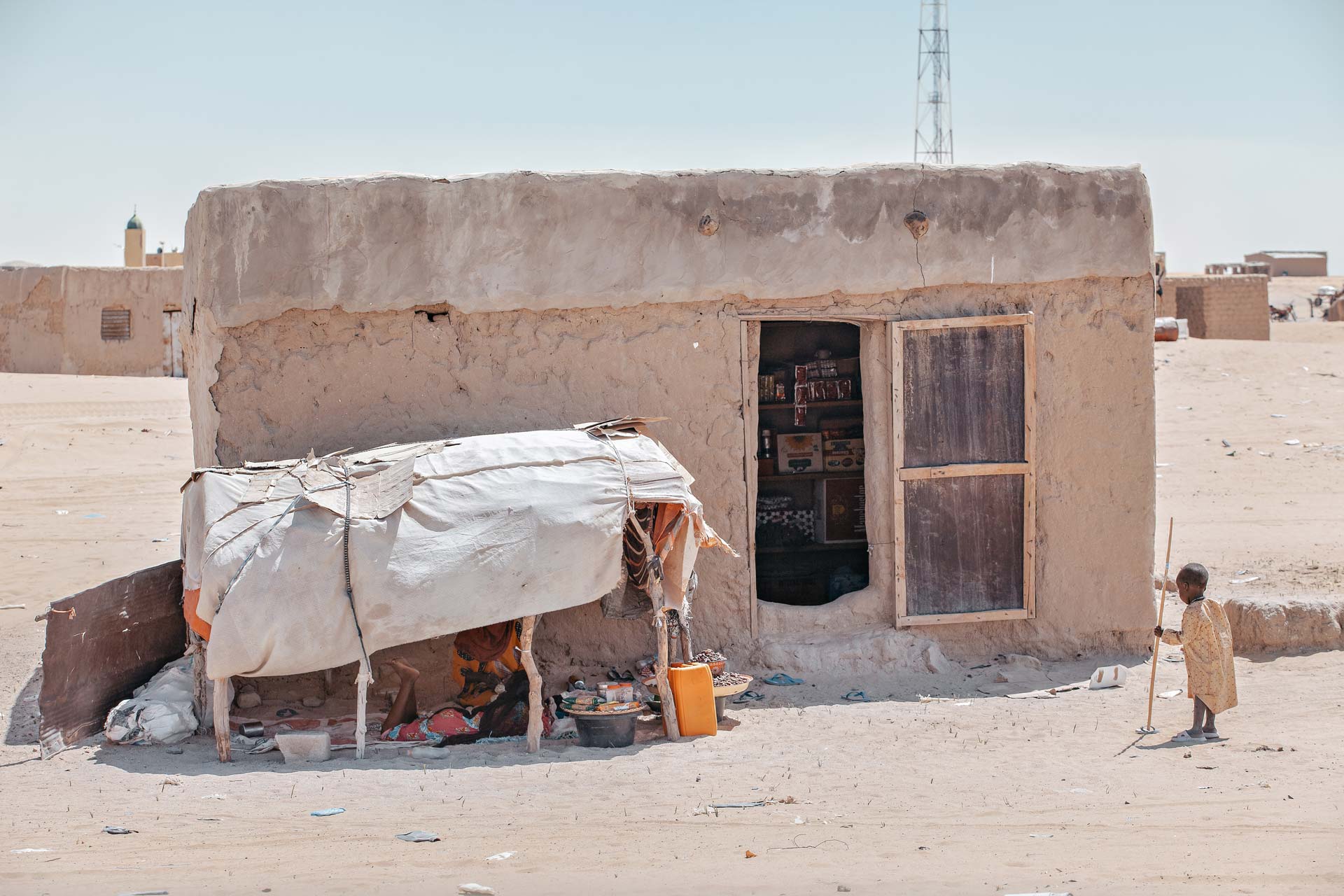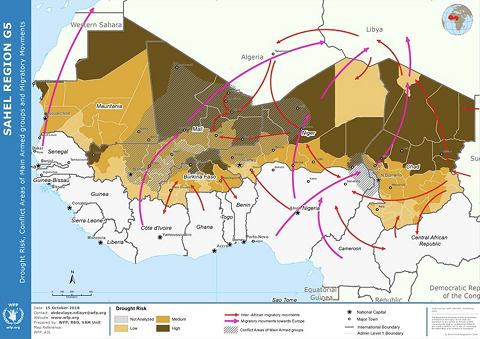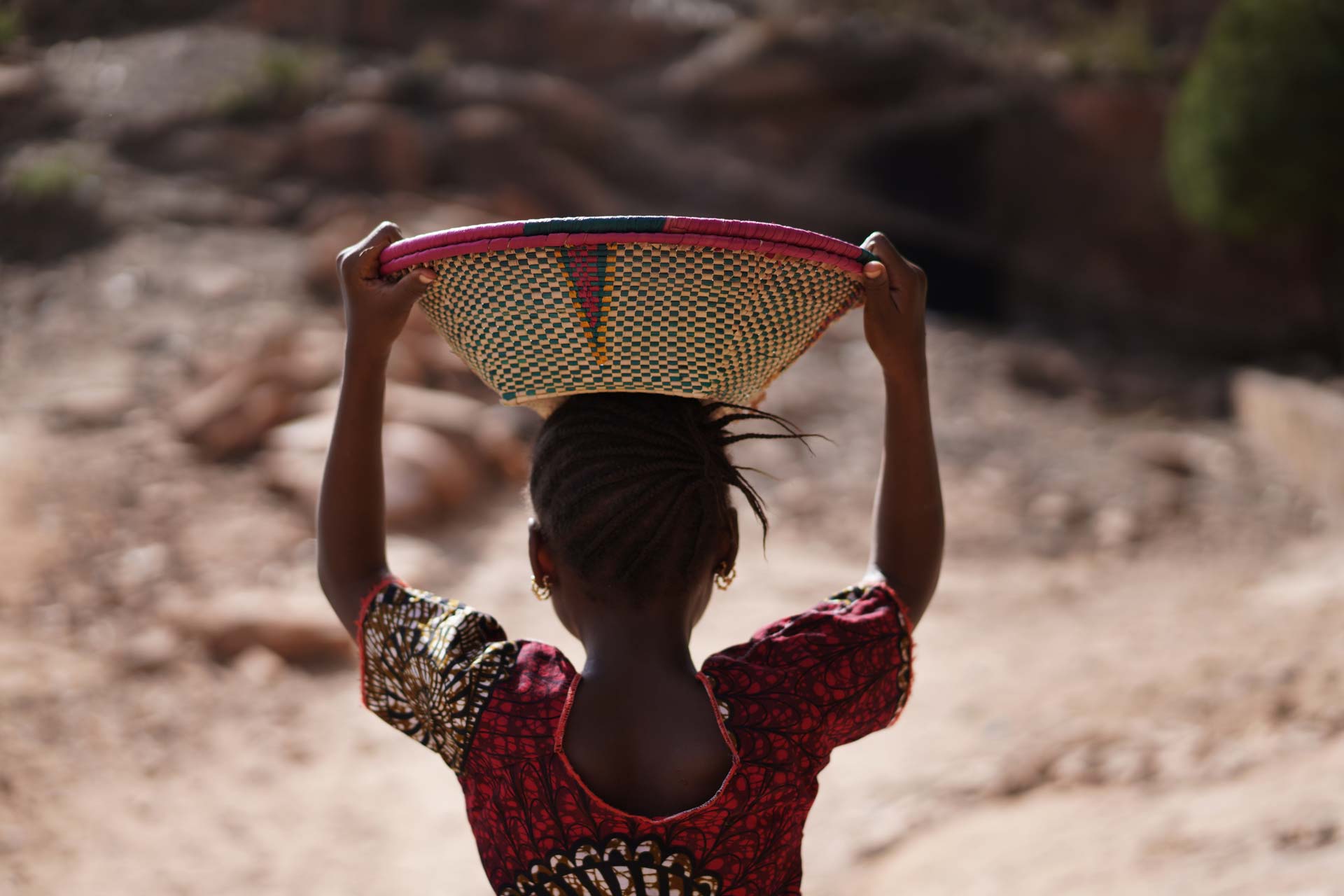


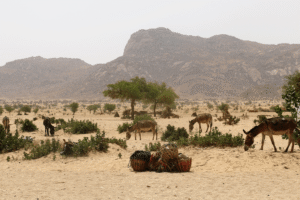
Like many other communities in Chad and across the Sahel, the Tandou Valley faces multiple intertwined challenges, including a degraded ecological landscape, climate change, hunger, poverty, and armed conflict.
Environment
Climate change is impacting Chad and the semi-arid Sahel region with nearly unparalleled impact, to the degree that Chad ranks last out of 182 countries in the 2020 Notre Dame Global Adaptation Index on climate change vulnerability. Inhabitants in the Sahel belt have historically relied upon farming and livestock for their livelihoods, but shifting rain patterns and intensifying droughts make subsistence challenging and agricultural advancement even more difficult.

An increasingly common occurrence, the “lean season” happens in years of intense heat and drought, typically between June and August. The lean season is associated with the hottest time of the year, when food insecurity rises sharply and communities require humanitarian assistance to meet food and nutrition needs. Overgrazing, erosion, cutting of vegetation for firewood, and biodiversity loss combine to further degrade surrounding ecosystems.
Economics
Food insecurity and environmental degradation are inextricably linked in a region of fragile ecosystems, such as Chad. Both contribute to the economic insecurity of individuals and households, resulting in 42% of the country’s population living below the poverty line. Due to the lack of a strong and consistent revenue base in the area, local, regional, and national governments offer few if any resources to help persons in economic distress.
Poor infrastructure for food production, processing, storage, distribution, and sale constricts the potential for markets and economic development. The remoteness and lack of resources in rural areas often makes it harder to ensure that all individuals and households receive the provisions and support they need simply to survive.
Geopolitics
More than 1 million refugees currently reside in Chad, making it one of the largest and fastest-growing refugee populations in Africa. The intense conflict in Sudan, just east of Chad, has forced hundreds of thousands to leave their homes, along with other refugees from Central Africa and Nigeria.
These refugees fled conflict only to find themselves in communities already in economic and environmental distress, with few income opportunities or basic human services, resulting in 40% of these refugees suffering from poor food consumption. Additionally, efforts to confront the Sudanese refugee crisis in the east left refugees around Lake Chad and in other parts of the country with little to no aid.
Society
As natural resources have dwindled and demographic pressures have increased in Chad, income opportunities have decreased and internal strife has intensified, with minimal social services available to deal with the effects. In 2023, approximately 2.1 million people were severely food insecure during the increasingly frequent “lean seasons” (usually occurring between June – August), marking the fourth consecutive year of high severe food insecurity.
More than 31% of children suffer from stunting due to malnutrition, due in part to the poor health of pregnant and breastfeeding mothers. In 2020/21, Chad ranked next to last globally for gender inequality. Both education and health services are severely limited, making societal transformation very difficult.


About
The Greening platform is produced by The Lexicon with support from the World Food Programme. The World Food Programme is scaling resilience in the Tandou Valley and other communities across the five countries in the Sahel. The Resilience Monitoring and Measurement framework shows positive outcomes in ecological restoration, food and nutrition security, economic empowerment, access to social services, reduction of daily hardships, and social cohesion.

Team
Lexicon of Impacts is based on the Ecological Benefits Framework (EBF). This new paradigm provides a foundational architecture to radically transform global carbon, biodiversity, and ecological benefits markets. Coordinating financial institutions, UN agencies, NGOs, companies, and catalytic capital will bring attention to—and help create—a shared pathway for accelerated solutions, providing economic support for the people and projects that need it most.
This website was built by The Lexicon™, a 501(c)(3) tax-exempt nonprofit organization headquartered in Petaluma, CA.
Check out our Privacy Policy, Cookie Policy, and Terms of Use.
© 2026 – Lexicon of Impacts™